
Week 8 : Art Movement
According to Reina-Rozo (2021), Solarpunk is defined in this guide as a speculative genre that blends art, technology, and sustainable futures. Solarpunk envisions a world where technology and ecology work together to create equitable, hopeful futures. This is an aesthetic, philosophical, and social movement that emerged in Brazil in the early second decade of the 21st century, particularly in 2011, as a reaction to the dystopian pessimism of other creative endeavours. For characteristics of solarpunk, it depicts a world where ecology, democratic technology, solar and wind, and tidal energy are vital elements to create a well-being world in the future. This does not mean that solarpunk only uses high-tech to solve environmental problems, it includes both high-tech and low-tech when these kinds of technologies are combined and support each other. As a result, solarpunk societies could reach a post-scarcity state, where everyone has enough resources without destroying the planet (Gillam, 2023).
Garden by the Bay
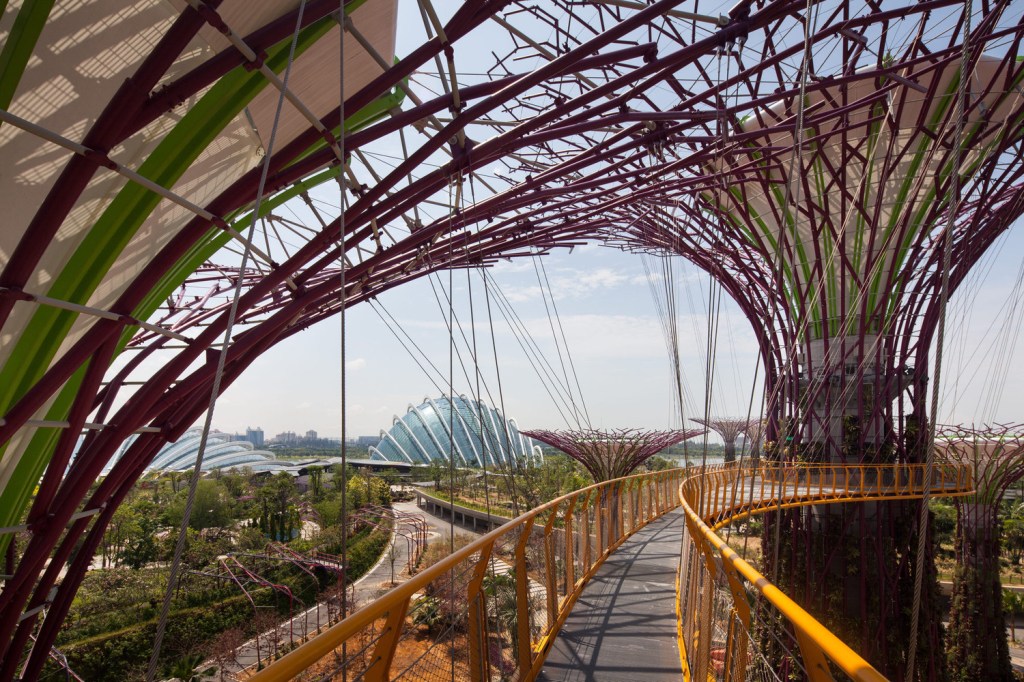
Garden by the Bay is a combination of nature, technology, environmental management, and imagination, while also serving as a testament to the art of gardening and landscape architecture (Greenroofs, 2022). This proves that Garden by the Bay is an example of the Solarpunk art movement. The project area is located in Marina Bay, a large, reclaimed land area which was a barren piece of land, lacking roads, drainage, and electricity, has been transformed into a lush green space home to over one million trees (Greenroofs, 2022). Technologies used in the project show that technologies do not nature, they are serving nature and people. This became a special point of the project when people could see giant artificial supertrees which illustrate an image of a giant forest in a unique futuristic style. These trees also have multifunction as becoming huge columns for climbing plants, epiphytic plants and tropical ferns integrated with light systems for people’s nightlife and sustainable energy and water technologies play a crucial role in cooling greenhouses (archdaily, 2012). These trees are not only the focal point of the entire project but also represent a strong contrast merge of hardscape and softscape material when a sharp, rigid geometric framework constructed from a concrete core and steel truss became a foundation for climbing plants to cling. The impressive height of supertrees brings an overwhelming sense of spatial proportion for the viewer making people who visit the garden become tiny creatures because it draws the observer’s gaze from the ground all the way up into the air. There is an elevated walkway system connecting the supertrees, guiding users through natural and urban landscape, this eliminates the gap between people and nature which allows people to have 360-degree panoramic views of the lush greenery of Gardens by the Bay and the Marina Bay skyline. This artwork shows the connection of technologies and nature where they exist and support each other. The success point of Garden by the Bay is how people integrate mechanical engineering, visual arts, and ecology into a single space.
Additional Research : A Central Park for Ho Chi Minh city
I did more analysing about this project because it is my very first inspiration in beginning of my own project.
I was inspired by the LAVA team and Aspect studio. They won an international competition to design a Central park in Ho Chi Minh city (Vietnam), with construction due to start in 2020 (Harrouk, 2019). The project inspired me a lot because the use of technologies helps conserve nature and brings benefits to human life. It lays the foundation for a deeper relationship between humans and nature, while emphasizing the profound importance of the living environment to everyone today.
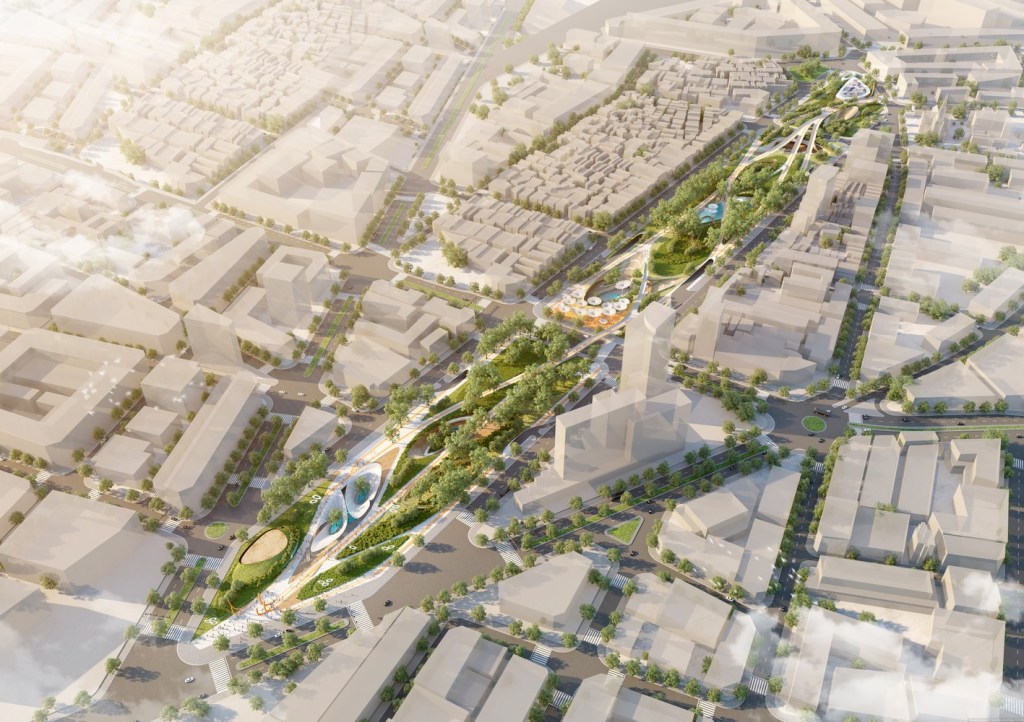
The project is notable for its artificial trees such as ventilation trees, water purification trees and solar trees which have shapes as reverse funnels, big mushrooms or umbrellas. They are designed to integrate with modern materials, integrated solar panels and waste/water collection systems (Harrouk, 2019).
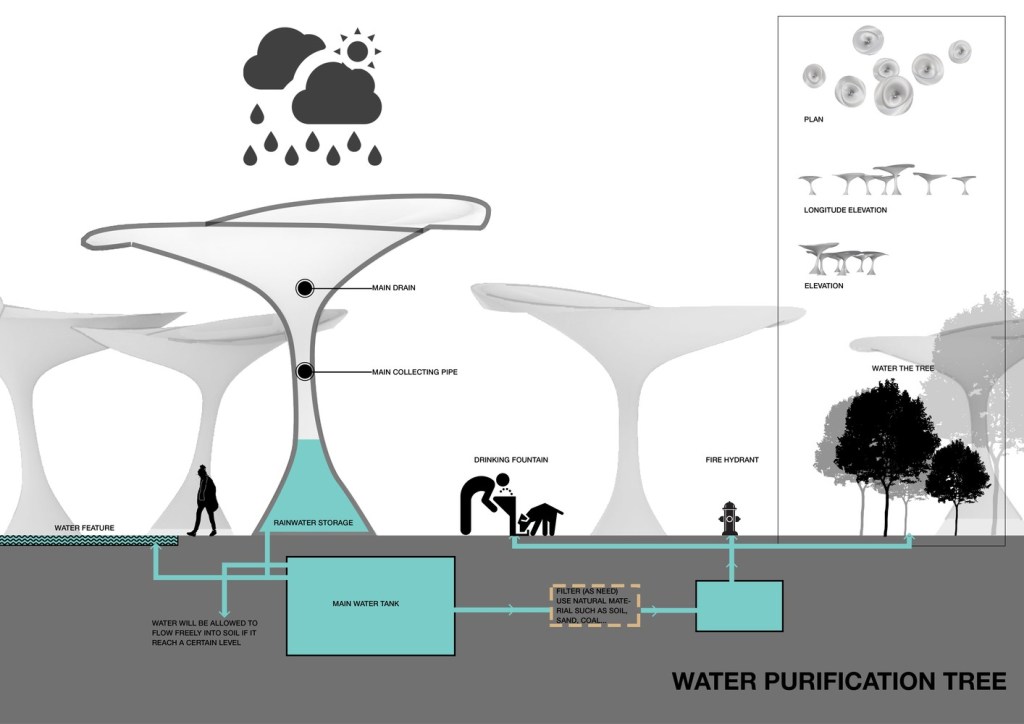
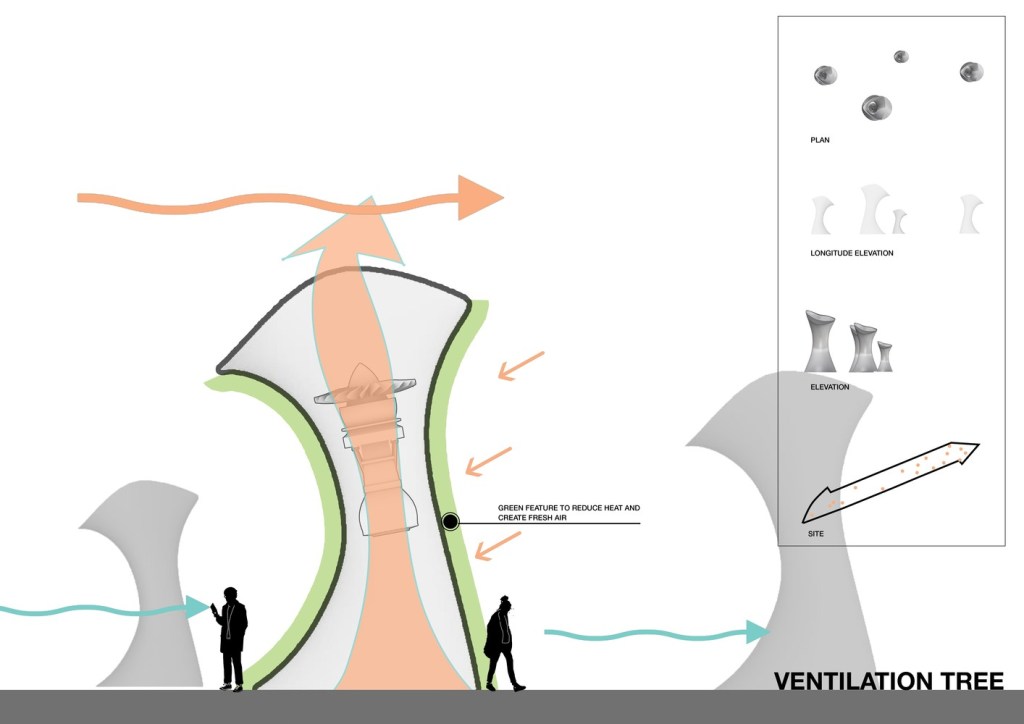
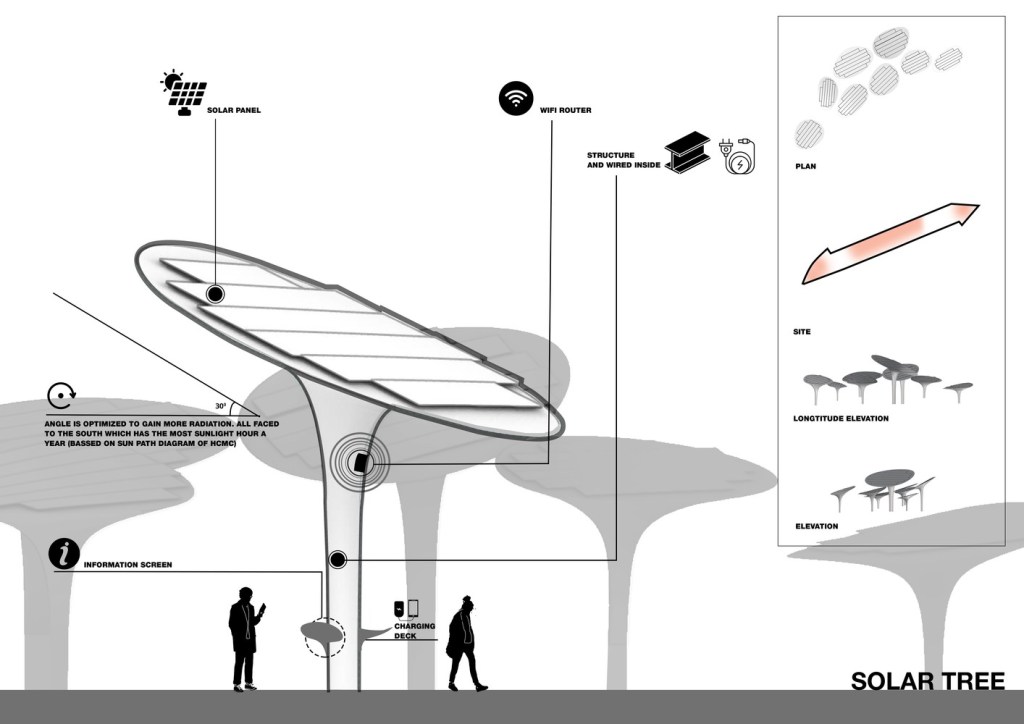
The project showed the harmonious connection of both natural and artificial trees, when natural trees and ventilation trees create fresh air and reduce heat for people in hot weather of Vietnam, purification trees and solar trees collect the natural energy to serve for visitors. The LAVA team and Aspect studio designed pathways, lawns, and water features all utilize organic curves, continuously winding and intertwining without sharp edges. This creates a soft feature specially contrast with the buildings surrounding which are high and box-shape and grid-like road network surrounding Ben Thanh Market. The park will play a role as a green lung in the heart of Ho Chi Minh city for energy production and environmental cleanup. Functional optimization is a success point of this project because they utilized the climatic characteristics of Vietnam, simultaneously solving the heat problem of Vietnam climate for people.
 Phuong Vi Nguyen