
Week 1 – Introduction
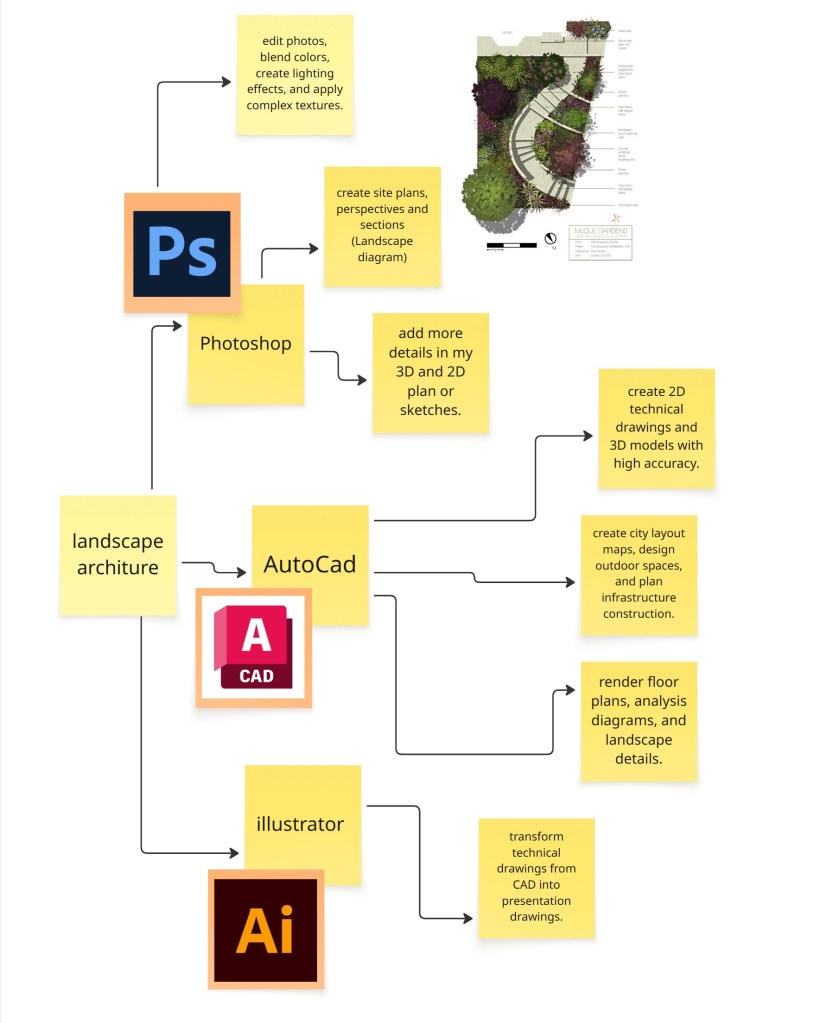
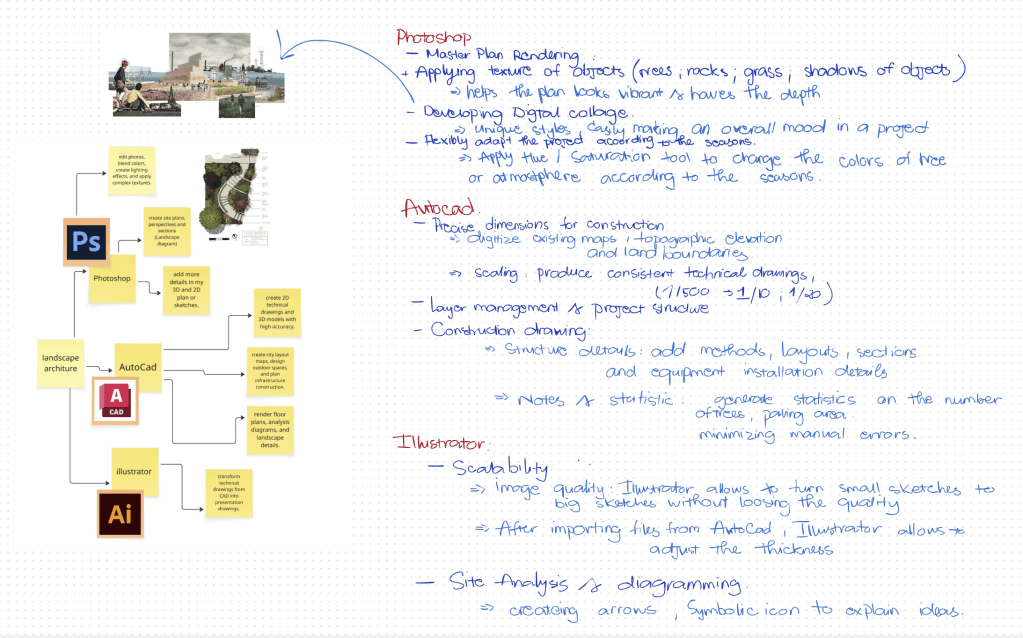
For landscape architecture, Photoshop, AutoCad and illustrators are necessary for me. AutoCAD is an important software that I want to learn this semester. It’s a necessary skill for an architect who wants to work on projects with precise and realistic measurements. Real-world landscape architecture projects often have a scale of 1:1000 or 1:1:1000. As the range of scales expands, architects will observe an increasing number of factors to consider: the physical and psychological interaction between humans and the physical environment. This means that knowing how to use Autocad is necessary for landscape architecture. Adobe Photoshop is the primary tool for visual persuasion and emotional storytelling. In university programs, where grading criteria emphasize visual communication, Photoshop is indispensable. It allows students to overcome the rigid limitations of CAD by incorporating elements of texture, light, shadow, and biological complexity to shape the mood of a landscape. For students with backgrounds in traditional art or collage, Photoshop is the digital version of the canvas, enabling the creation of spaces that can sell to clients. Recruitment data from leading companies like ASPECT Studios or LAVA consistently lists advanced digital rendering skills as a prerequisite. They not only just require technical drawings but they also require emotionally rich images that can win design competitions. Illustrator is the standard vector graphics software for creating diagrams that simplify complex systems into easily readable graphics. Furthermore, it is the industry standard for compiling portfolios and presentations. A student portfolio is their passport to employment; creating crisp, high-resolution layouts that integrate text, CAD drawings, and Photoshop rendered images is impossible without Illustrator.
 Phuong Vi Nguyen