
Week 2: Annotations & My personality
- Section 1:
Today, I was asked to do a SWOT list, about my strengths, weakness, oppoturnities and threats. For me, this is a hard task, be cause I can’t identify my strenghth. Then I read my feedback from last semester to find some points and remind me about strengths and weakness.
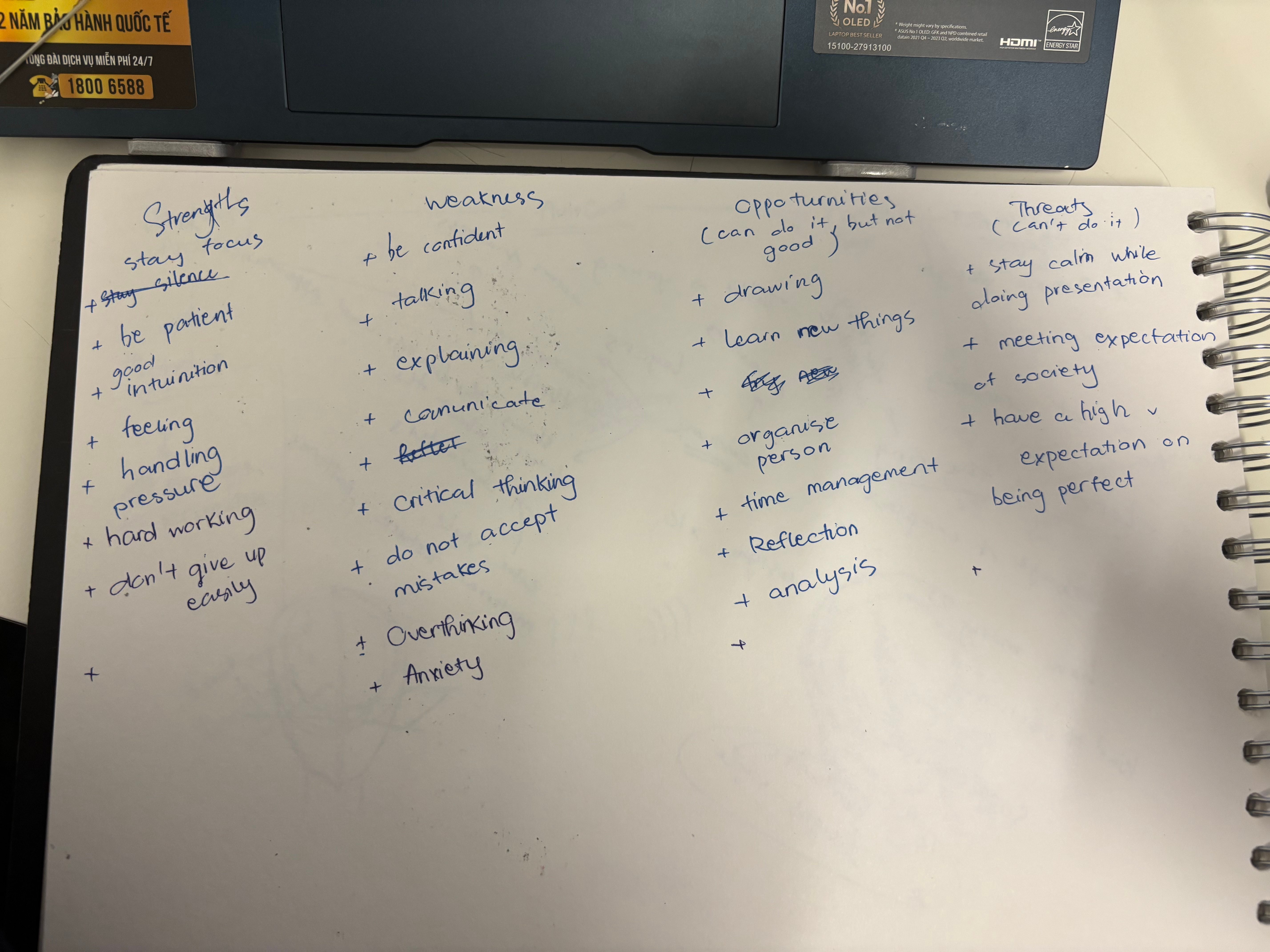
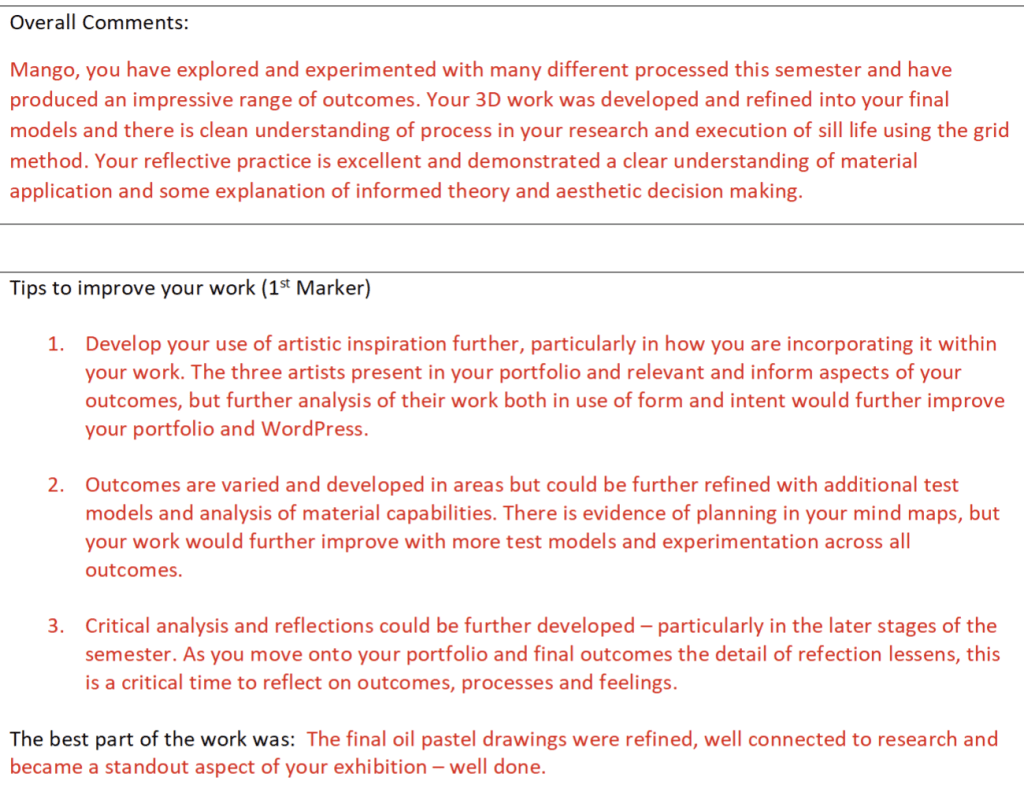
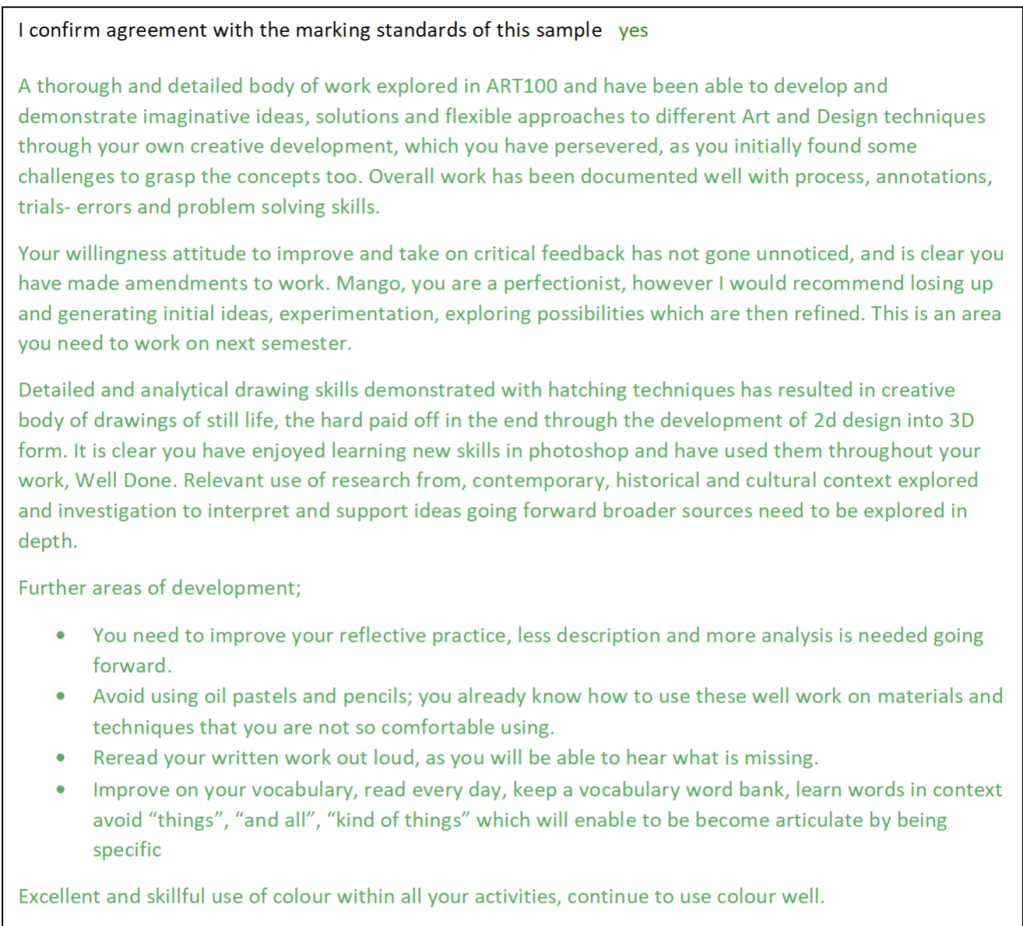
After reading, I think I know the reasons why I have these feedbacks.I’m too focused on what I want to do and doing it perfectly. Furthermore, I base everything on my own feelings about the work rather than the author’s intentions. Next, my time management skills are lacking; I haven’t really managed my time well, so experimenting with different materials, identifying the limitations of other materials, and exploring completely new ones never met deadlines. I think I’ve been very diligent, but this diligence hasn’t been effective. Plus, I think some of my weakness coming from because I want to be enough or perfect.
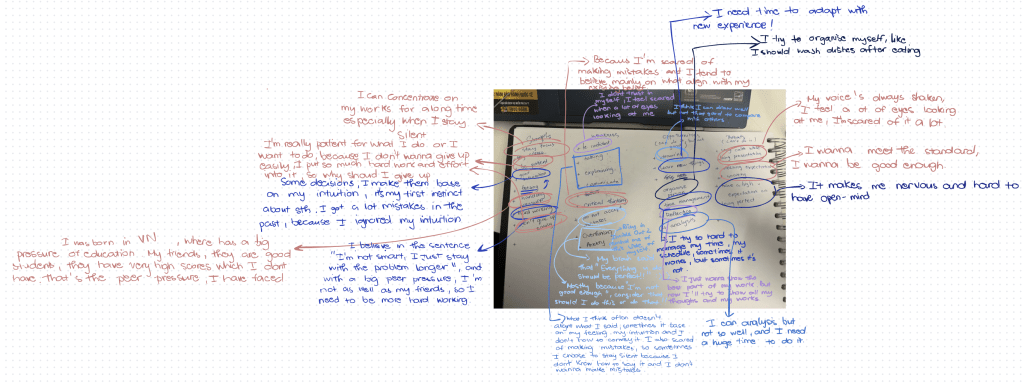
Then, It is what I think and my thought of my SWOT.
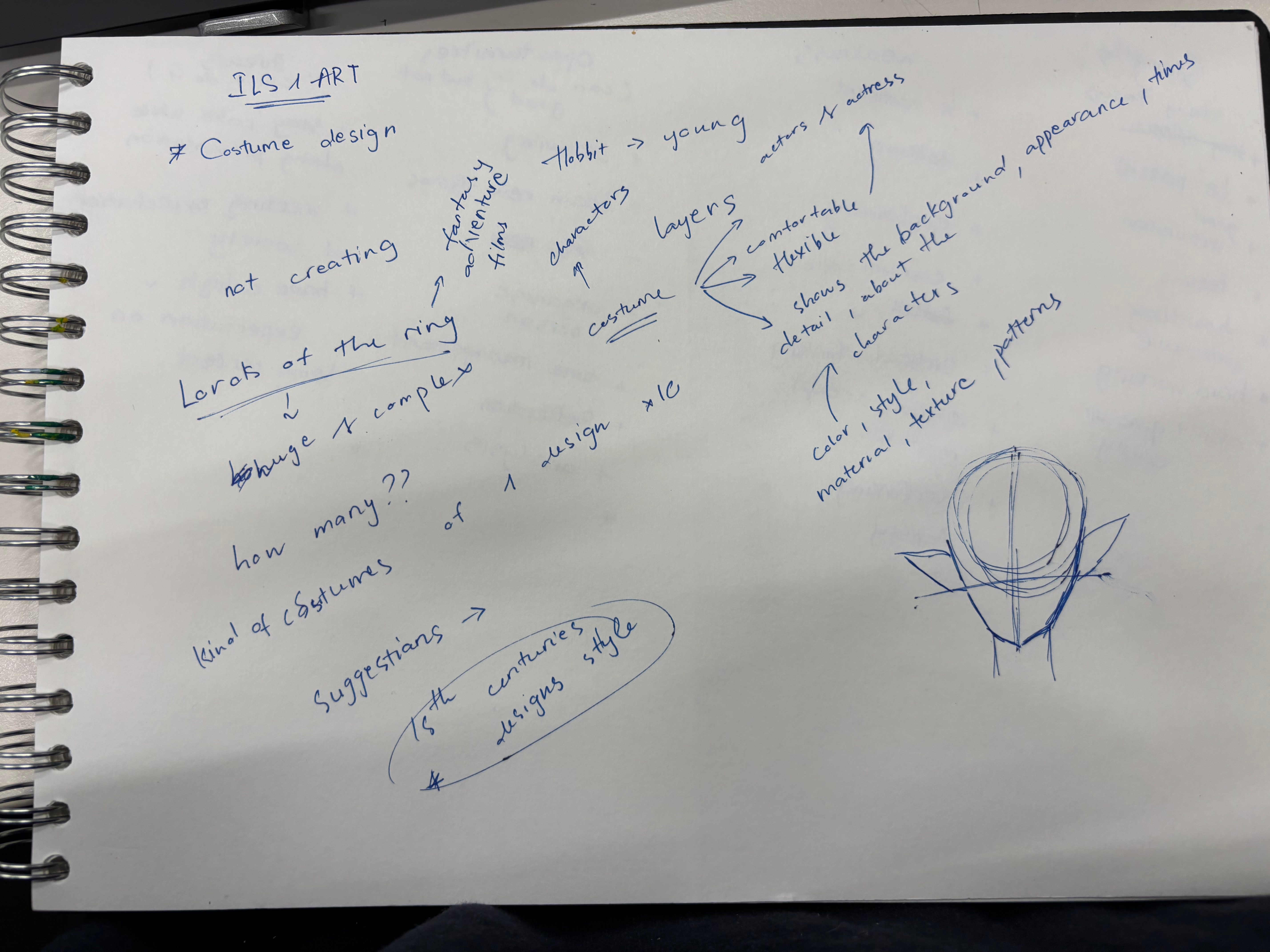
These are the annotations I wrote based on the video Costume Design | Lord of the Rings Behind the Scenes. I usually make overall annotations when I only watch the video once.
Then when I got home, I take annotations more details to answer the task.
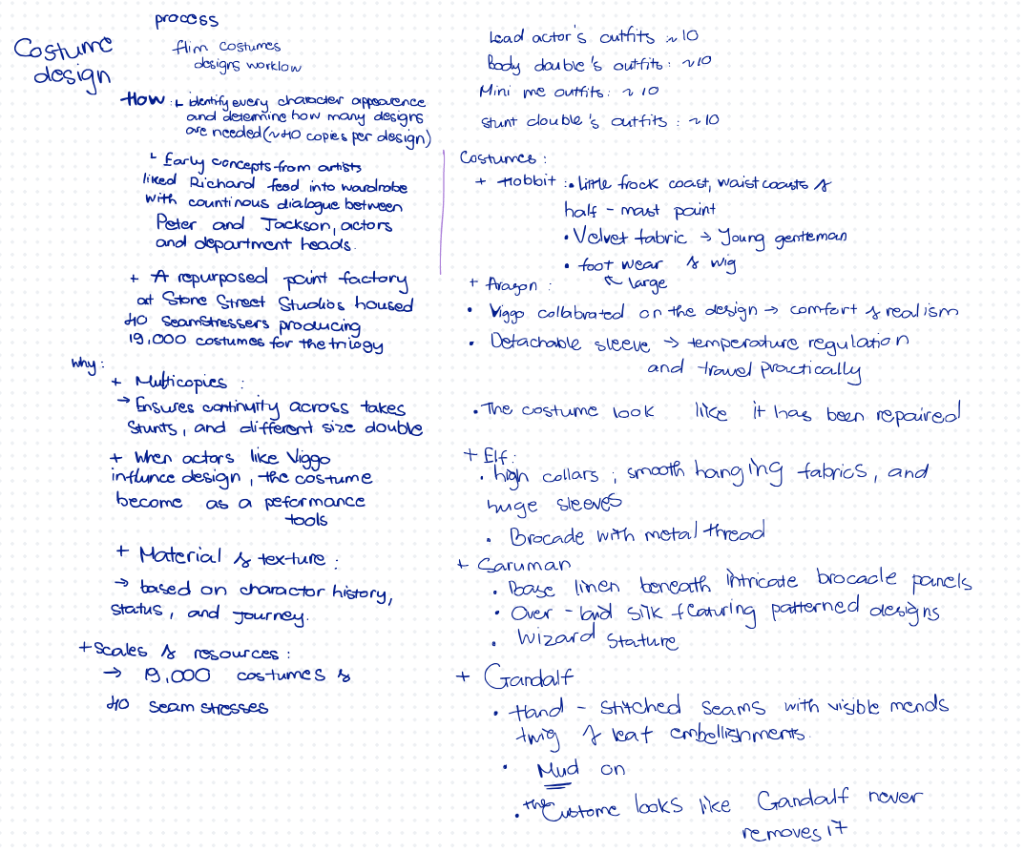
5 annotations:
Identify the process: Building an art foundation is the process of studying the fundamentals of art in depth (not just surface-level understanding, but dedicating yourself to mastering concepts like perspective, rendering, and anatomy throughout your life).
How it’s done:
- Deep study of fundamentals: Going beyond basic 1-, 2-, and 3-point perspective and simple shading to understand these concepts in much greater detail.
- Dedicated practice: Spending endless sessions studying perspective and rendering in depth.
- Lifelong commitment: Understanding these concepts “in as much detail as you can throughout your life”.
- Core areas of focus: Perspective, rendering, and anatomy form the foundation.
Analyze why it matters
- Ability to Realize Ideas
+ It gives the skill set to turn imagined scenes into finished drawings.
+ can create things that match your vision, especially for 3D worlds like comics, animation, and illustrations.
- Flexibility
+ Gain the ability to create things that other people ask you to create.
+ This is essential for professional working artists who need to take on a wide array of projects in the entertainment industry.
- Common Language
+ Foundations provide a shared vocabulary that’s useful for communication.
+ This helps in professional environments where you need to articulate decisions and collaborate with teams and clients.
Identidy the proccess: learning to draw “just by doing it”, creating image by image through experimentation rather than following a structured curriculum. You skip or minimize formal study of art fundamentals (perspective, rendering, anatomy) and instead learn through hands-on practice and problem-solving.
How it’s done:
+ Jump in and experiment: start creating work immediately, learning techniques as you need them for specific pieces
+ Learn image by image: each new piece teaches you something new; you solve problems as they arise
+ Self-motivate consistently: you must set your own goals and push through challenges
+ Figure it out yourself : Rely on trial-and-error rather than external instruction or “truth” from foundational rules
Why it matters: it produces unique benefits that foundation heavy training may not have:
+ More personality in your work: avoiding external rule sets lets your unique quirks and style emerge naturally.
+ A stronger, more determined attitude: Solving problems independently builds confidence and resilience.
+ Better design & audience understanding: Self-taught artists tend to focus on what works for viewers rather than impressing teacers, leading to more efficient, impactful solutions.
+ Career viability: Many successful professionals reached high levels without deep foundational study, proving this path can work.
Identidy the proccess: Perspective Drawing (a foundational technique in observational drawing that helps artists construct accurate 3D space on a 2D surface.
How it’s done:
Eye level determination: finding the horizontal plane through the viewer’s eyes
Vanishing point location: identifying where parallel lines converge on that eye-level line
Cylindrical curvature prediction: understanding how horizontal bands on cylinders curve based on their position relative to eye level
Why it matters: Understanding the underlying perspective geometry prevents common drawing errors like misaligned edges or incorrect cylinder curvature. Less guessing and correction later in the drawing process.
Identify the Process: The album’s creative process was a year-long journey, meticulously planning and incorporating raw vulnerability into a coherent artistic expression.
How it’s done:
+ Initial sketches: Lay down rough ideas without pressure on perfection
+ Emotional testing: Walk out of each session asking: “Did I leave a piece of myself in this song?”
+ Feedback loop: Team vocalizes “that’s not it” when a take lacks the right feeling, prompting another round
+ Narrative alignment: Every surviving track must serve a specific purpose in the personal story
+ Confidence building: Start with high anxiety, gradually take vocal risks, and eventually reach freedom and enjoyment
Why it matters: This process plays a crucial role in transforming personal pain into a resonant connection with the community. By prioritizing authenticity over perfection, artists are willing to discard shallow works to retain the most original stories. When vulnerability is exposed through music, it not only fosters personal growth from anxiety to freedom, but also creates a cycle of self-validation through audience empathy.
Identidy the proccess: building confidence through discipline
How it’s done:
Set a specific goal: Choose something concrete (e.g., wake up at 7 a.m.)
Create a step-by-step plan: Breaking it down into actions (run → laundry → skincare)
Track completion: Checking off items on a daily to-do list
Maintain consistency: Following through even when tired or unmotivated
Use micro-commitments: Making and keeping small promises throughout the day
Create a feedback loop: Celebrating each check-off to reinforce the habit
Why it matters: This matters because consistently meeting challenges reshapes a concept of yourself from feeling shy or unworthy to seeing yourself as capable of hard things. Unlike external enhancements that provide temporary confidence, discipline builds sustainable, it need to be maintained. A track record of achievements also provides resilience against external criticism, protecting you from negative things and creating a foundation of inner peace and confidence.
- Section 2:
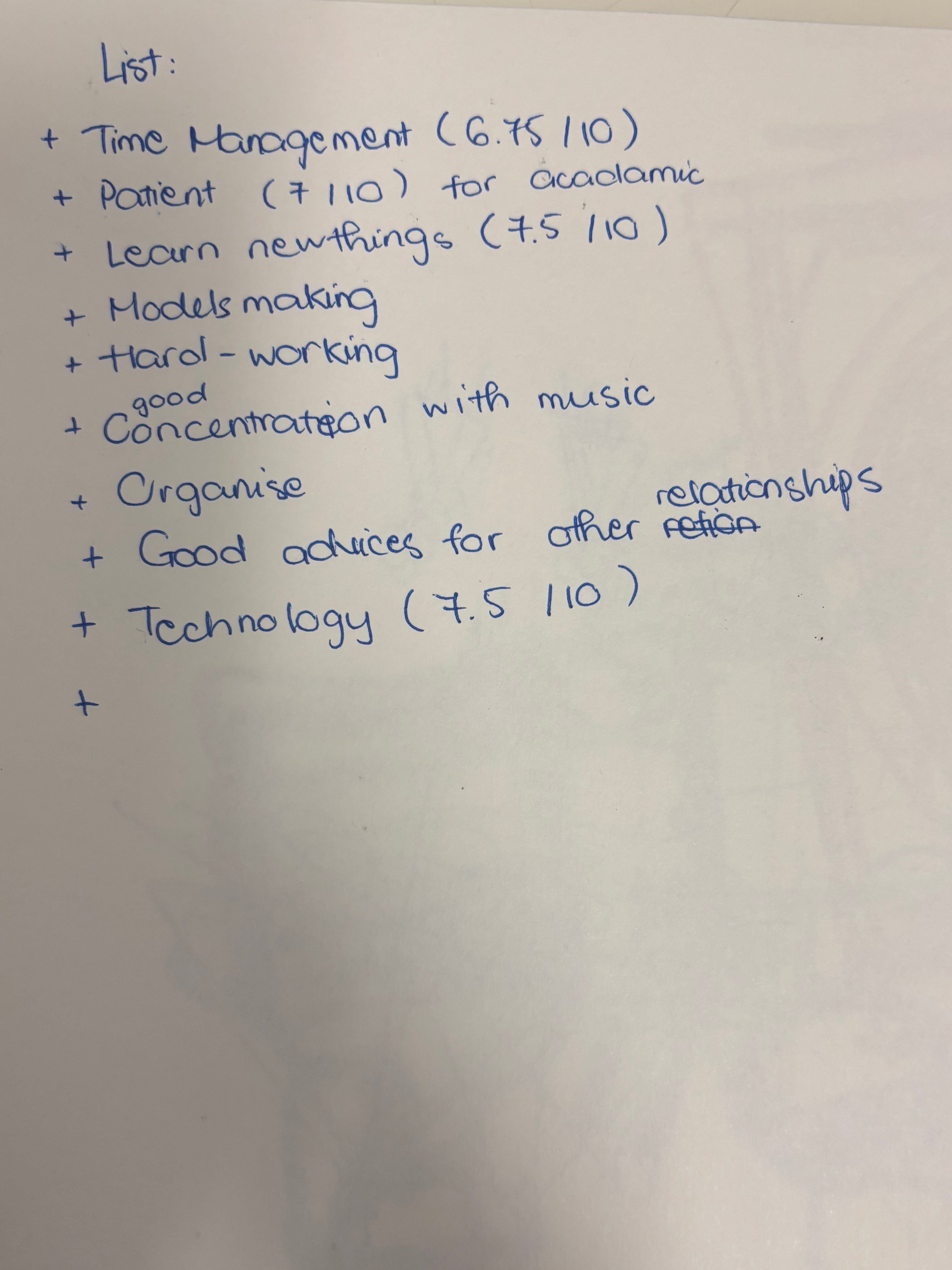
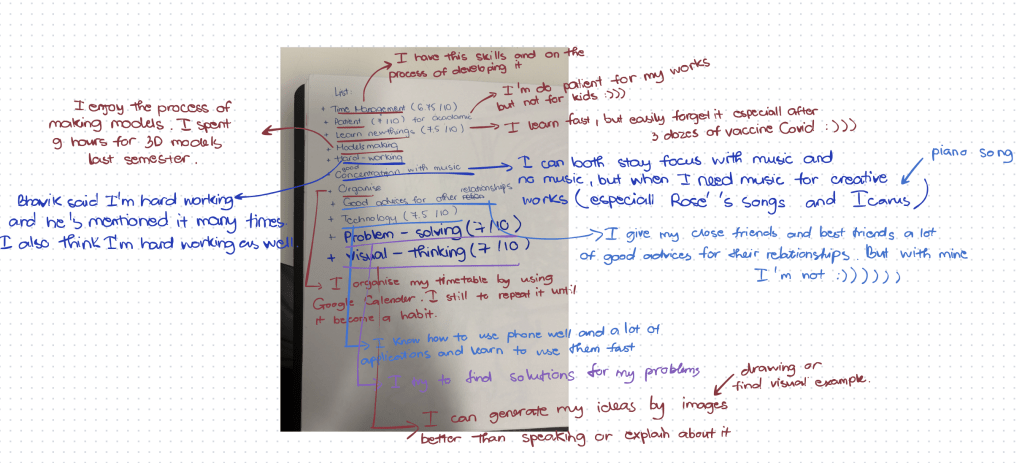
This my thoughts of my skills which I wrote them down, I also rated them, because I think I have these skills but not perfectly.
Today, I was asked to do MBTIs test to find my personality. Actually, I’ve taken this test many times since I was in high school, maybe because this test is quite popular in South Korea (Kpop), and I really like Korean culture. . I know my MBTIs is INFJ, but I still did the test again, because MBTIs can change over time.
That’s pretty true, but I’m generally more introverted, more of a social introvert, so I still think INFJs suit me better. I feel quite drained when interacting and working in a team environment. I identify myself as a highly responsible person, always approaching work with dedication and perseverance. I’m often sensitive to criticism, but sometimes I accept it because that’s what others think of me. When taking on the role of Finisher, I remind myself not to get too caught up in the details and forget the bigger picture of the project.
As a Finisher (69 points), my greatest strengths lie in my meticulousness, discipline, and ability to maintain high standards for perfection in my work. However, for holistic development, I need to learn to balance this perfectionism by cultivating a broader perspective, avoiding excessive detail-driven thinking that could negatively impact overall progress or put pressure on my teammates. Because I tend to shy away from conflict and easily hurt by criticism, I will focus on building resilience and the ability to objectively address opposing viewpoints. Furthermore, instead of just playing a supporting role, I will leverage my skillful discussion leadership abilities to hone my supervisory and team management skills in areas where I currently lack confidence. Finally, I will learn to be more open in sharing personal achievements instead of being overly modest, helping to build a more confident and professional image in the design environment.
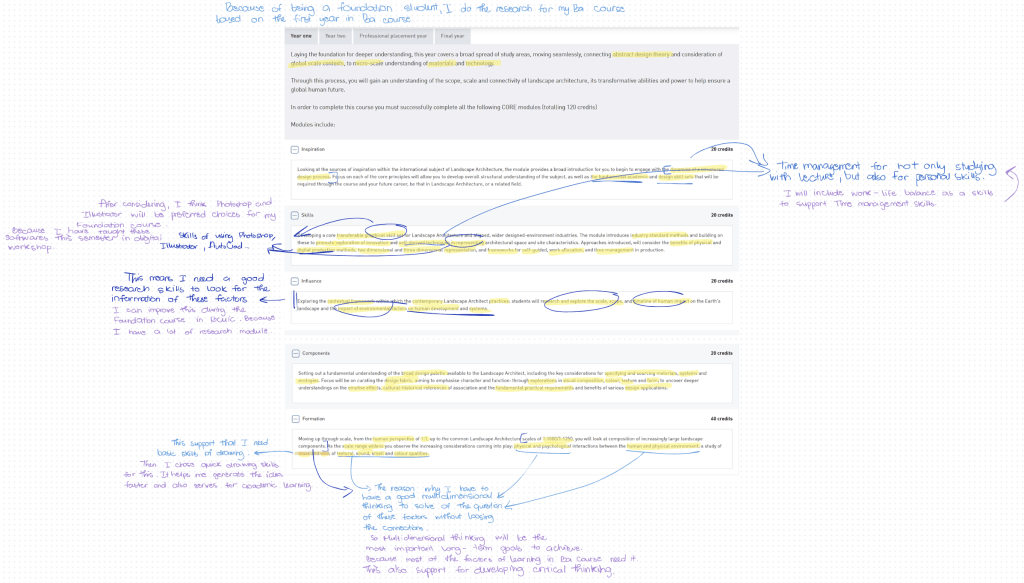
In paralel with that I have I looked into BCU website for understanding more about my Ba course and what module I will learn. Then I noted down what skills I have and what I should gain for my learning in Ba course.
https://www.bcu.ac.uk/courses/landscape-architecture-ba-hons-2026-27#course_in_depth
Based on the SWOT model, and information about the three Landscape Architecture courses, I will write an analysis of my suitability for the modules I will be taking at the undergraduate level, based on my strengths and weaknesses. Additionally, I will identify areas for improvement to become a successful Landscape Architecture student.
These modules require the ability to represent architectural spaces in both 2D and 3D, using industry-standard methods, working with visual elements (color, texture, form), and handling various scales from 1:1 to 1:1250. I have a very good foundation in physical modeling and good spatial intuition. My ability to learn new technologies is fairly good (7.5/10), which provides a good foundation for learning new software. I currently lack standard graphic design software skills (such as advanced AutoCAD and Photoshop) for digital visualization and perspective rendering. My quick sketching skills for testing layout options on paper also need further improvement.
The program requires students to have a basic academic foundation, the ability to research the impact of the environment on humans, and to analyze the psychological and physical interactions between humans and space. I possess empathy and the ability to give good advice in relationships, which gives me a natural sensitivity when analyzing the psychological factors of landscape for human. I also have patience in an academic environment (7/10). I lack a solid foundation in critical thinking and flexible, multi-dimensional thinking. My biggest obstacle is a lack of confidence, difficulty communicating and explaining ideas, and a tendency to panic when presenting in front of a crowd.
The “Skills” module particularly emphasizes students’ ability to effectively allocate work and manage time. I have the ability to concentrate highly while listening to music, a diligent work ethic, the ability to withstand pressure, and I don’t easily give up. My current time management skills are quite weak (6.75/10). Furthermore, my habit of overthinking and my unwillingness to accept mistakes easily cause me to delay the project’s progress.
In short, analyzing the modules I will be studying in my first year of undergraduate studies helped me identify what skills I currently possess and what skills I lack.
 Phuong Vi Nguyen