
Week 5&6 Twinmotion
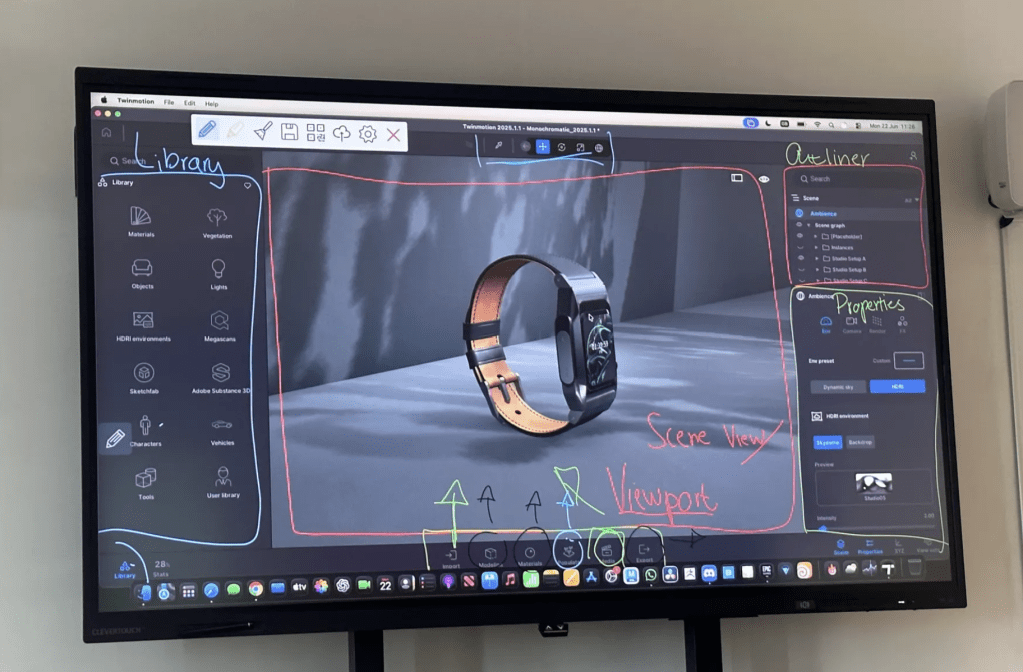
Twinmotion also has layout a little same with Maya, but the library is more clearly than Maya that I can know each function of the tools.
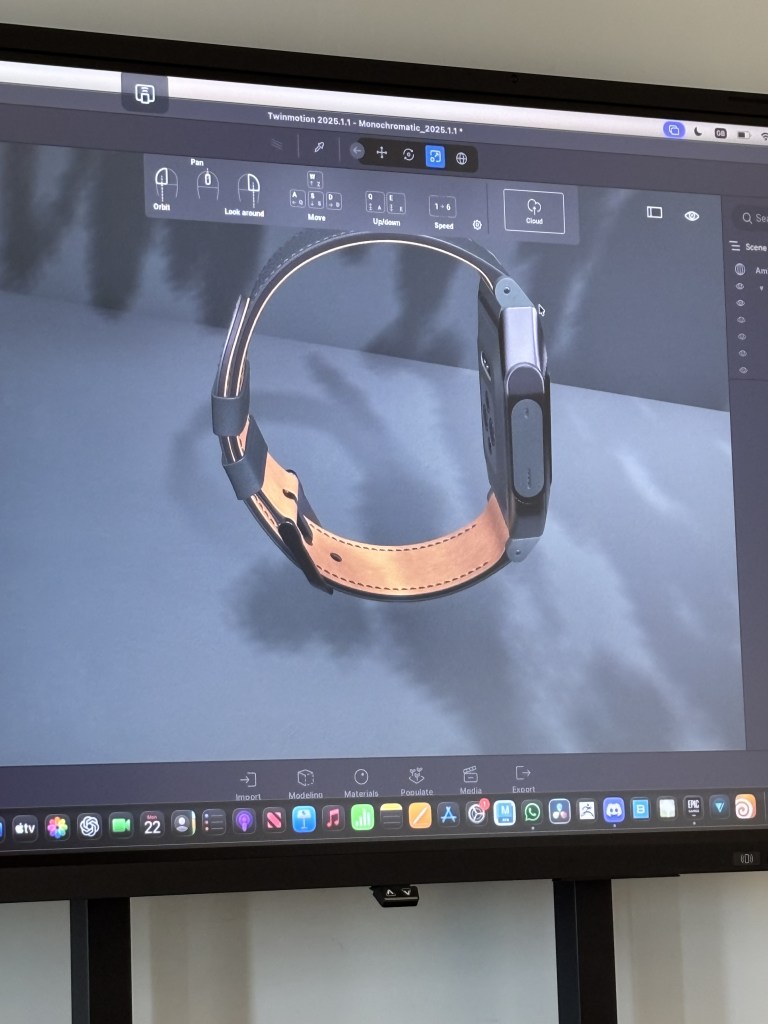
Here I can move object with these button (A/W/S/D) and up down (Q/E) which likes moving bar of computer games I usually play.
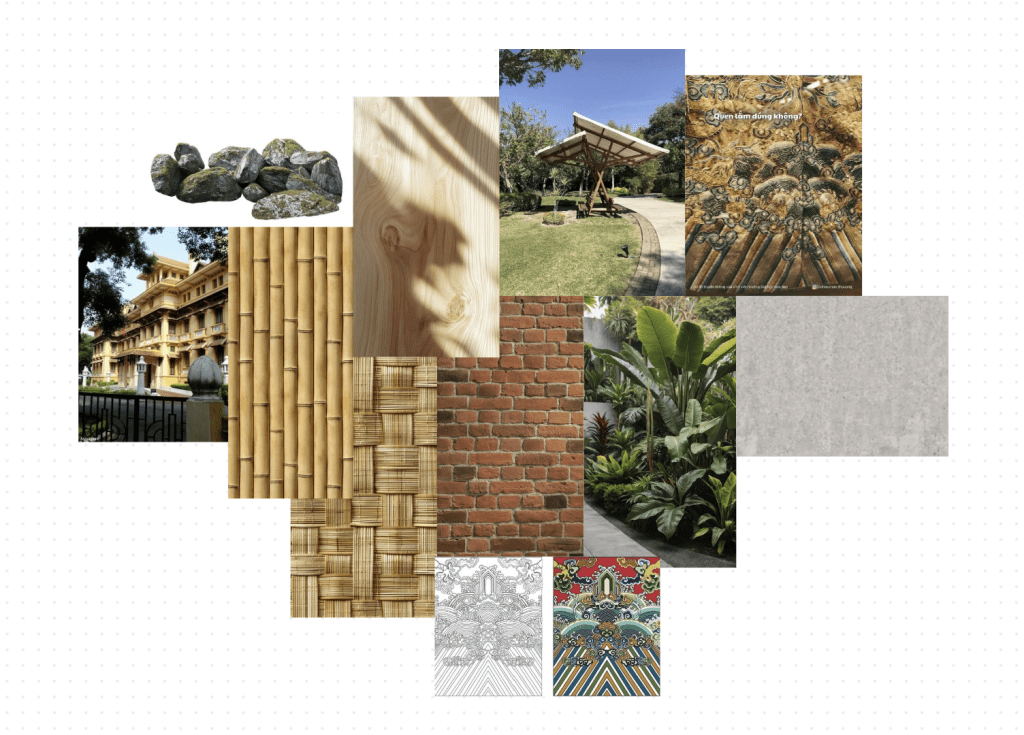
This the mood boarch of some material I will use for my pavillon of the park.
Key words: Indochine style, wood, bamboo, warm colour, pavillon, Vietnam’s pattern.

This is some landmark nearby the park that I need to design my pavillon to match the vibe of overall.
Research about 3D printing
- What is 3D printing?
3D printing is a technology used to manufacture components. Its additive nature means that the process does not require a solid block of material or a mold to create a physical object; instead, it involves stacking and bonding layers of material together.
This technology typically offers high speed and low costs, enables the creation of complex geometries beyond the capabilities of traditional methods, and supports a wide range of materials. It is widely applied in engineering, particularly for prototyping and the production of lightweight structures.
As we can see that it involves stacking and bonding layers of material together. It can make may types of objects depends our need. To illustrate easily, we can see the images below.
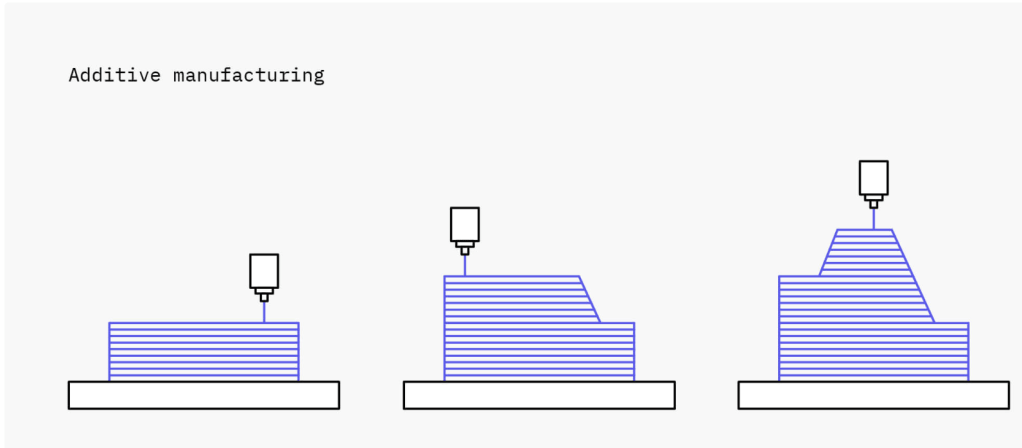
Additionally, we also have many type of 3D printing. Additive manufacturing is the common one.
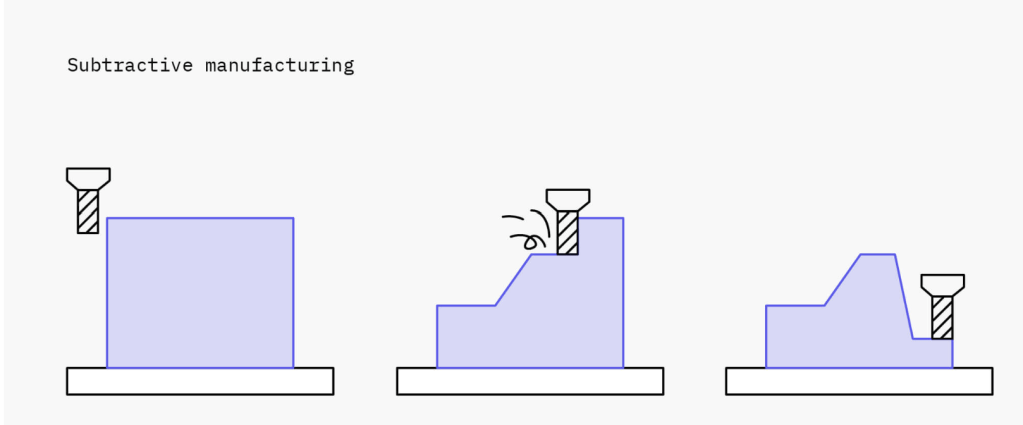
As subtractive manufacturing which is the opposite of the additive manufacturing, it model and shape on a block of material . Creating objects by removing (machining) material from a solid block of material, typically referred to as a “workpiece.” This is also a wasteful process, as a large amount of material is removed to achieve the component’s final shape.
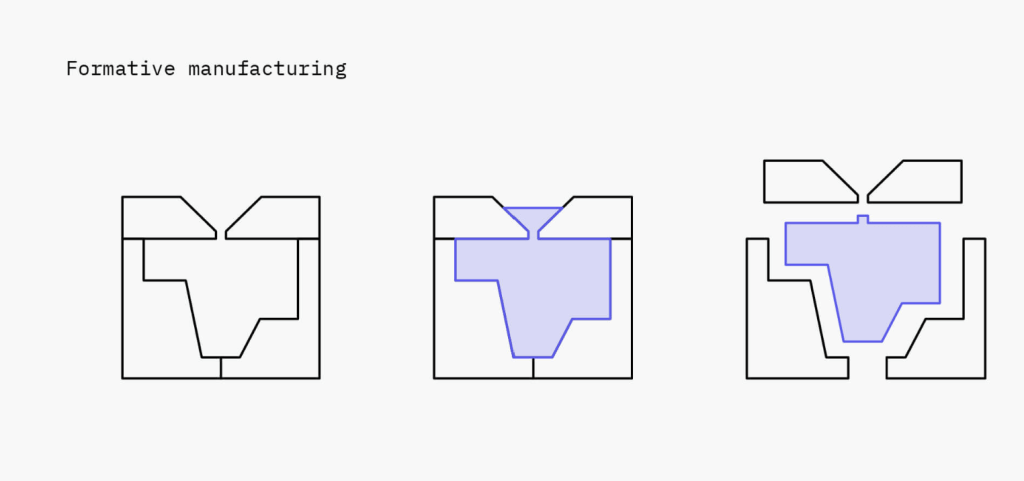
Formative manufacturing is molding and forming processes, such as injection molding and stamping, create objects by shaping or forming materials into the desired form using heat and/or pressure.
What material can be used for 3D printing? Thermoplastic and thermoset polymers are the most common 3D printing materials, but metals, composites, and ceramics can also be 3D printed.
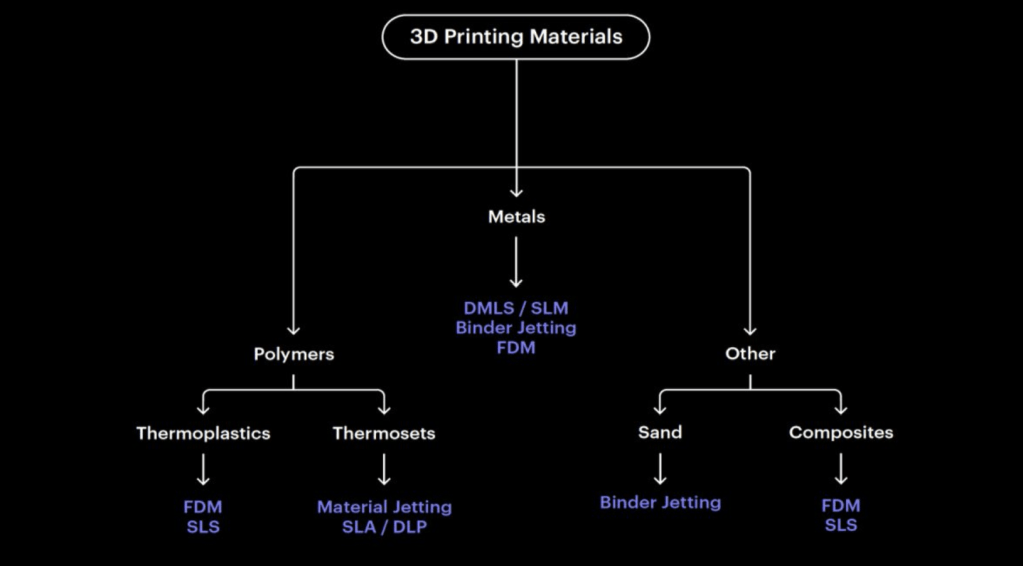
There are many types of material can be used for 3D printing but I just sort out of PLA, ABS, PET, Nylon, TPU and PC (polycarbonate).
- PLA is the easiest polymer to print with and yields high-quality results. It is very rigid and durable, quite brittle.
PLA is bio-based and biodegradable; it offers good UV resistance and can be post-processed by sanding and painting with acrylics. It also lacks any distinctive odor. On the downside, PLA has poor moisture resistance and is difficult to bond with adhesives.
-> I saw mostly 3D print Workshop in the uni use this material.
- ABS plastic is often chosen over PLA when higher heat resistance and greater durability are required. It offers good wear resistance, can be post-processed with acetone vapor to achieve a glossy finish, and can be sanded and painted with acrylic paint. ABS plastic is sensitive to UV light and can produce significant fumes. It generates an odor during the printing process.
- PET is a softer polymer with a uniform, rounded structure; it offers advantageous properties with very few significant drawbacks. In addition to high moisture and chemical resistance, PET is food-safe, recyclable, and abrasion-resistant. Like the previously mentioned materials, it can be post-processed by sanding and painting with acrylics. The only notable downside is that it is heavier than PLA and ABS.
- Nylon possesses excellent mechanical properties, notably the highest impact resistance among non-elastic fibers. It offers outstanding chemical resistance and high durability. However, inter-layer adhesion can be an issue with nylon; the material absorbs moisture, and printing with it may result in the emission of toxic fumes.
- TPU is primarily used in applications requiring material flexibility and high impact resistance. It offers good abrasion resistance and is unaffected by contact with oils or greases. However, TPU is difficult to post-process after printing and is not easily bonded.
- PC (polycarbonate) is one of the most durable materials for 3D printing and can serve as an alternative to ABS, as their properties are quite similar. This material can be sterilized and is easy to post-process, although it is sensitive to UV light.
Hubs (2023). 3D Printing & Additive Manufacturing – a Complete Overview. [online] Protolabs Network. Available at: https://www.hubs.com/guides/3d-printing/ [Accessed 3 July 2026].
Hubs (2024). What’s the ideal filament for FDM 3D printing? 3D printing materials compared | Protolabs Network. [online] Protolabs Network. Available at: https://www.hubs.com/knowledge-base/fdm-3d-printing-materials-compared/#what-is-pet [Accessed 3 July 2026].

