
Week 2: Looking at Political and Social influences
First of all, I got a review of PESTLE models which helps me analyze artwork more perspective. Then, I looked back to some of the artists who I research before to identify PESTLE aspects inside their artworks.
For Le Corbusier, his artworks are related to the politcal, social and economy. In the Unité d’Habitation, He designed this building to be the solution for relocating large numbers of people displaced during World War II, so I identify it as political because his design changed after the war. Besides, the corridors inside the building are not just passageways but are designed to mimic “the streets of a typical city”, which I think creates a social area for people who live in the same building, so I identify it as a social element. Additionally, using béton-brut created by the wood grain created using wooden boards as molds to decrease the need for a steel frame, making it the most cost-effective solution which can be an economic element.
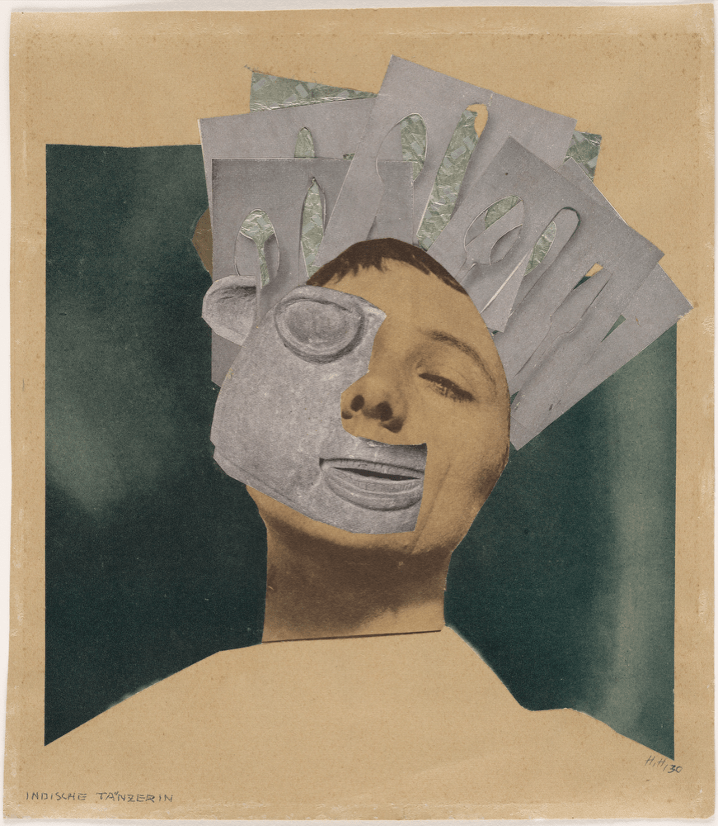
- What materials have been used? In my opinion, I think this is a collage work, used magazine paper, newspaper and cardboard.
- What do you think the artist is trying to say? I think the artist want to convey the message of women power or changing how people look into a woman.
- When do you think this piece was created? Maybe after the war or in the period when women in some countries have been treated badly.
- Do you like it? Why? I pretty like it because personally I quite like collage, and this piece has a vintage feel to it, giving me a sense of nostalgia and something from the past.
Actually, this is the artwork “Indian Dancer” of Hannah Höch in 1930. Höch explores the complex aspects of modern femininity by combining collage techniques with references to Central African sculpture, family life, and the film The Passion of Joan of Arc (Ünal Gerdan, 2024). This artwork related to the art movement Dadaism(Dada) which origin in Switzerland from 1916-1918, as a reaction to post-World War I in Europe. The war caused many impacts as unprecedented destruction, mass casualties, new war technologies. The artist wanted to respond to unprecedented destruction, mass casualties, new war technologies. Dadaists used “non‑art” materials to express discontent and process trauma.
Ünal Gerdan, S. (2024) ‘Sanat ve Teknolojinin Buluşmasından Doğan Bir Teknik: Dijital Kolaj’, Uluslararası Kültürel ve Sosyal Araştırmalar Dergisi (UKSAD), 10(1), pp. 51-69. Available at: https://doi.org/10.46442/intjcss.1446715.

