
Week 5: Legal and Economic Influences
Economic element impact on Landscape Architecture field
I believe economic considerations are crucial in landscape projects, as they influence decisions regarding design solutions, materials, and various other aspects. Therefore, this factor requires careful evaluation before any proposals are made for a landscape project.
There are many ways to reduce the construction and implementation costs of a landscape project. This research will mention 2 examples of means which help people save money.
- Using the Nature-Based Solutions instead of grey infrastructure:
Singapore’s Bishan-Ang Mo Kio Park is an example of using nature-based solution to save the maintenance costs.
Many years ago, Singapore used a concrete canal as a solution to controlling stormwater and flooding. However, when this canal needed to be repaired and maintained, people faced whether to naturalize the river or not due to the cost of maintenance. By cooperation of Singapore’s parks agency, Singapore’s national water agency and Ramboll Studio Dreiseitl created a new “blue green infrastructure” which brought the benefits of flood protection and improved water quality. Singapore’s National University did an analysis of cost and found that this solution is cheaper than the gray infrastructure before which cost just under $50 million (70 million SGD) compared to $74 million (105 million SGD).
Reference:
Beyer, L. and Anderson, J. (2020). Collaboration on Nature-Based Solutions is Key to Resilient City Infrastructure. http://www.wri.org. [online] Available at: https://www.wri.org/insights/collaboration-nature-based-solutions-key-resilient-city-infrastructure [Accessed 24 June 2026].
- Using new technology instead of traditional way:
Drones are a prime example of the use of technology in architecture and construction. Compared to traditional surveying methods, drone-based surveying can help reduce costs. To illustrate, the HS2 high-speed rail project in the UK has publicly estimated that deploying drones across the entire project over a five-year period will save approximately £5 million (about US$6.3 million). Specifically, conducting monthly progress surveys at a single construction site alone has resulted in annual savings of £20,000.
Reference:
Case (2016). Case Study – Drone Surveys – Drone Surveying. [online] Drone Surveying – Your Partners in Precision. Available at: https://dronesurveying.co.uk/projects/case-study-reduce-construction-errors/ [Accessed 25 June 2026].
Willoughby, J. (2024). Drones Save Balfour Beatty VINCI £5m On HS2 Project. [online] Heliguy.com. Available at: https://www.heliguy.com/blogs/posts/bbv-using-mavic-3-enterprise-on-hs2/ [Accessed 26 June 2026].
Legal element impact on Landscape Architecture field
I plan to incorporate the legal element into my project, which involves renovating the tropical agronomy garden in the Bois de Vincennes forest in France. Since the relevant legal information is quite difficult to find, I will rely on the sources I already have available.
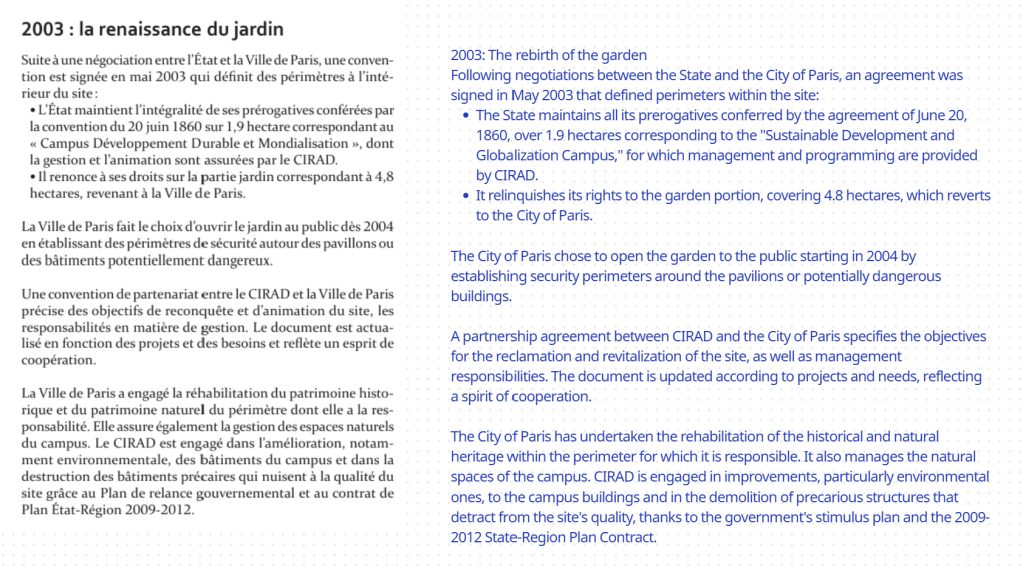
Atelier Parisien d’Urbanisme (APUR) (2013) Le Jardin d’Agronomie Tropicale: Bois de Vincennes. Perspectives d’évolution du site. Paris: Atelier Parisien d’Urbanisme
- From this, I learned that the area is managed by two separate entities: 1.9 hectares are managed by CIRAD, while the remaining 4.8 hectares are under the management of the City of Paris. Any plans for renovation or construction on these sections require obtaining permits from both organizations.
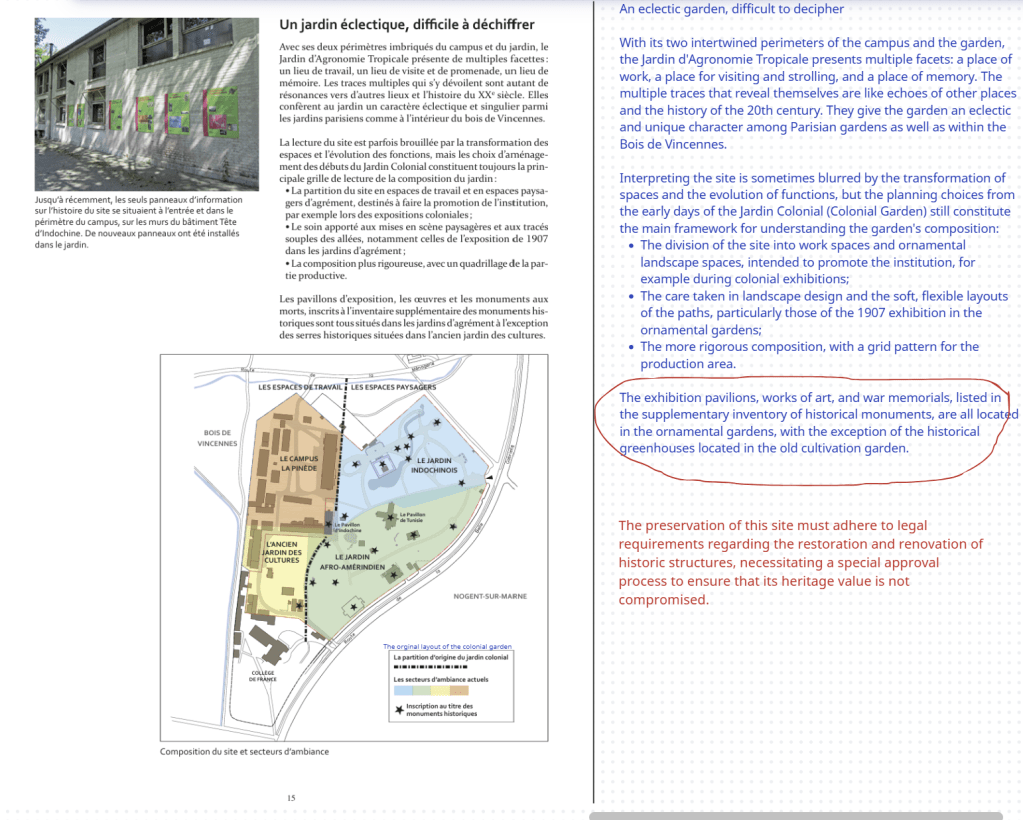
Atelier Parisien d’Urbanisme (APUR) (2013) Le Jardin d’Agronomie Tropicale: Bois de Vincennes. Perspectives d’évolution du site. Paris: Atelier Parisien d’Urbanisme
- According to the French Ministry of Culture’s (Monuments historiques,1992), the monuments in this area are listed as historical heritage sites. Thereby, I need to avoid any construction activity that would damage or alter the historical character of these monuments.
Monuments historiques (1992) Jardin d’Agronomie Tropicale, situé dans le bois de Vincennes. Available at: https://pop.culture.gouv.fr/notice/merimee/PA00086585 [Accessed: 26 June 2026].
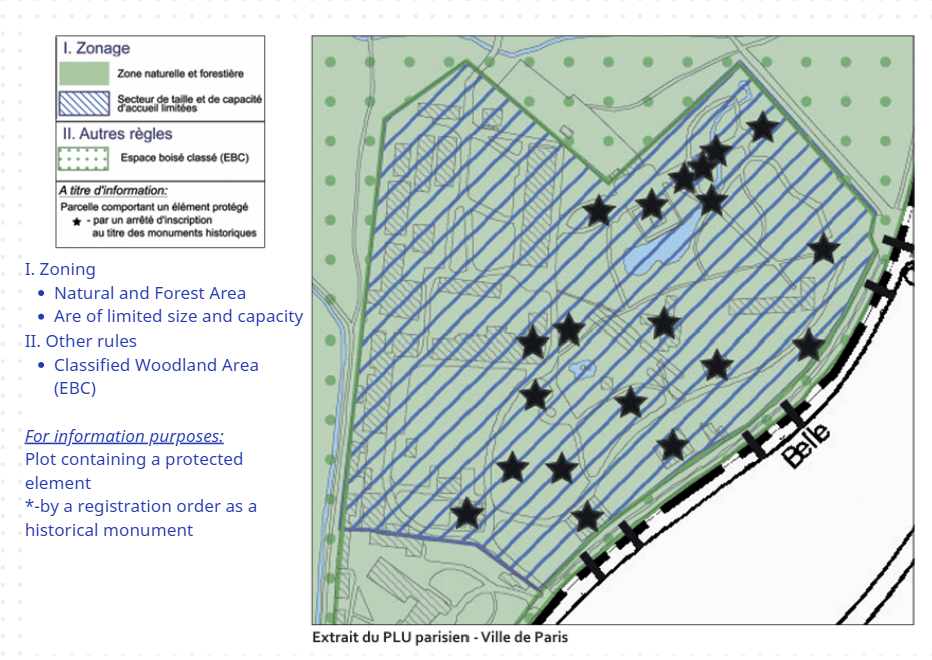
Atelier Parisien d’Urbanisme (APUR) (2013) Le Jardin d’Agronomie Tropicale: Bois de Vincennes. Perspectives d’évolution du site. Paris: Atelier Parisien d’Urbanisme
- As this area is designated as an EBC (Wooded Area to be Preserved) in Paris, it is classified as a natural woodland zone requiring protection. This status limits the buildable area, prevents the loss of the woodland character, and mandates strict control over any alterations to the land surface.
- Pursuant to Article L. 113-1 of the Urban Planning Code, classification as an Ecological Area (EBC) may encompass wooded areas, forests, and parks requiring preservation, protection, or creation, regardless of whether they are subject to a forestry management regime, enclosed, or adjacent to residential buildings.
L’équipe Juritravail (2021) Espace Boisé Classé : Que Peut-on Vraiment Y Construire Selon Le Code de L’urbanisme ? Juritravail, 4 March. Available at: https://www.juritravail.com/Actualite/espace-boise-classe-que-peut-on-vraiment-y-construire/Id/351654 [Accessed 26 June 2026].
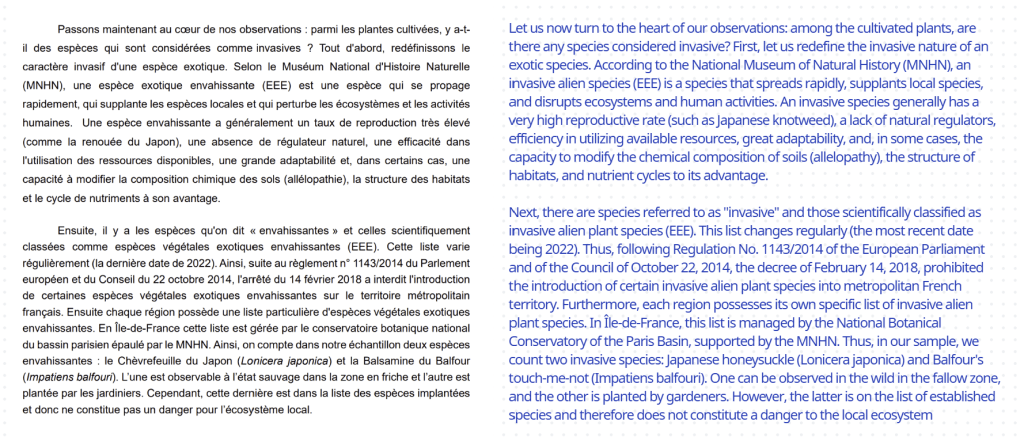
Chabrel, G., Derer, L., Hammouti, I. and Hersemeule, O. (2024) Tropical Agronomy Garden – Nogent-sur-Marne. Available at: https://www.academia.edu [Accessed 23 June 2026].
- Thereby, any proposal to plant new species within the garden development project must strictly adhere to this prohibited list. The management of species such as Japanese honeysuckle (Lonicera japonica) or Balfour’s touch-me-not (Impatiens balfouri) must be based on scientific classifications and the regulations of the Île-de-France region.
Essay feedback
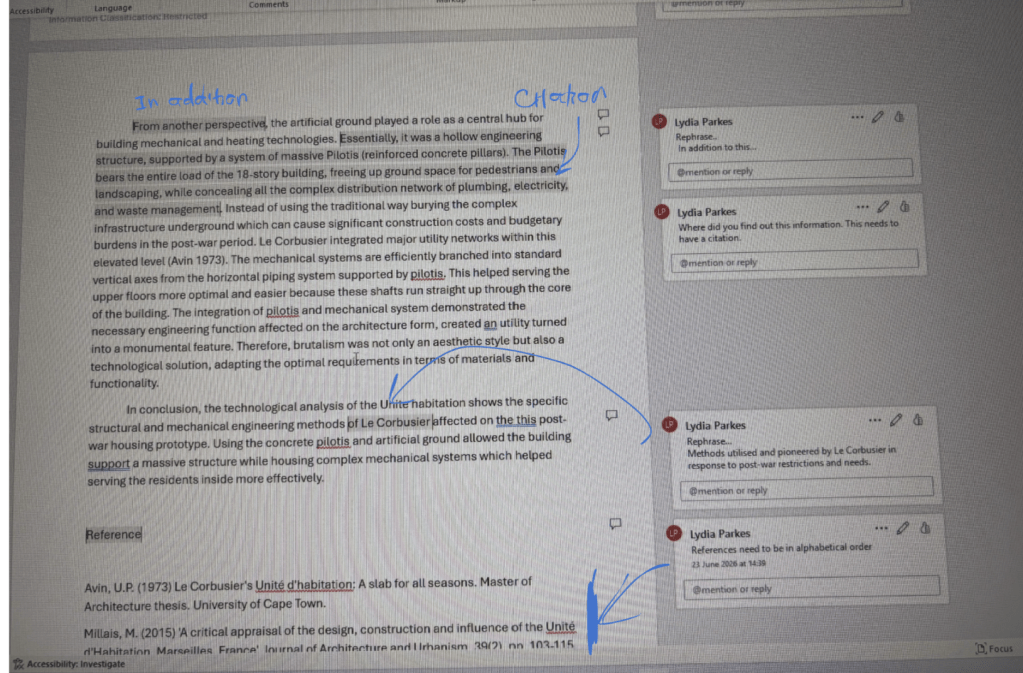
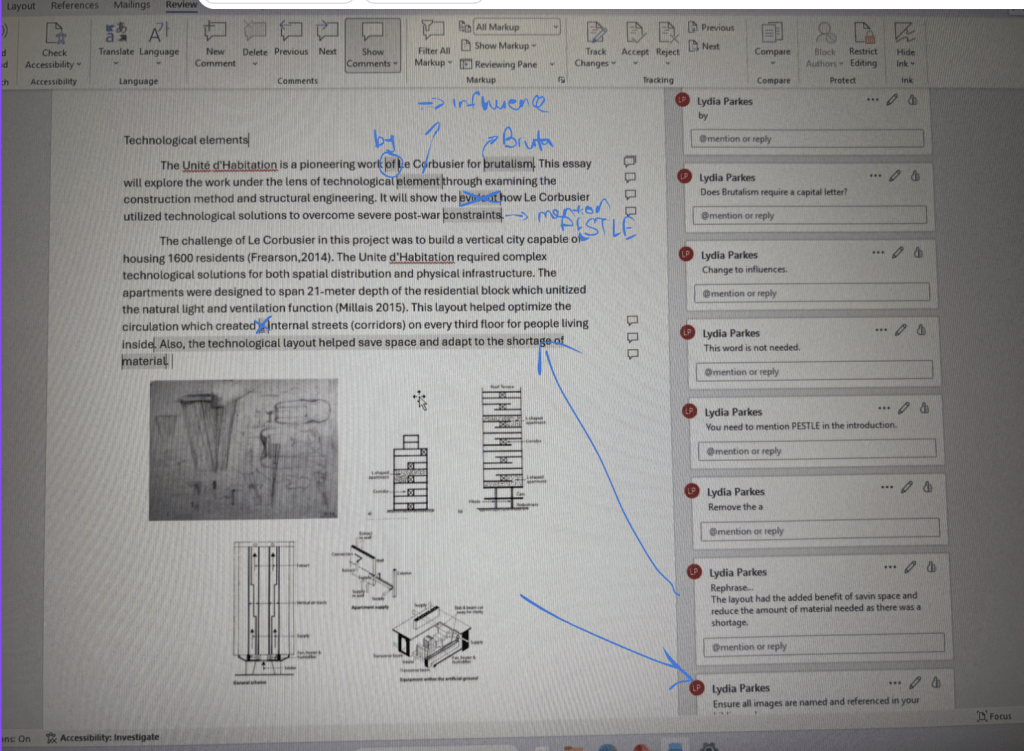
After 2 essays about Le Corbusier, I realize that I forgot to mention PESTLE elements in my introduction. Also, I forgot many intext-citations for images I used.
Artist Research: Bjarke Ingel
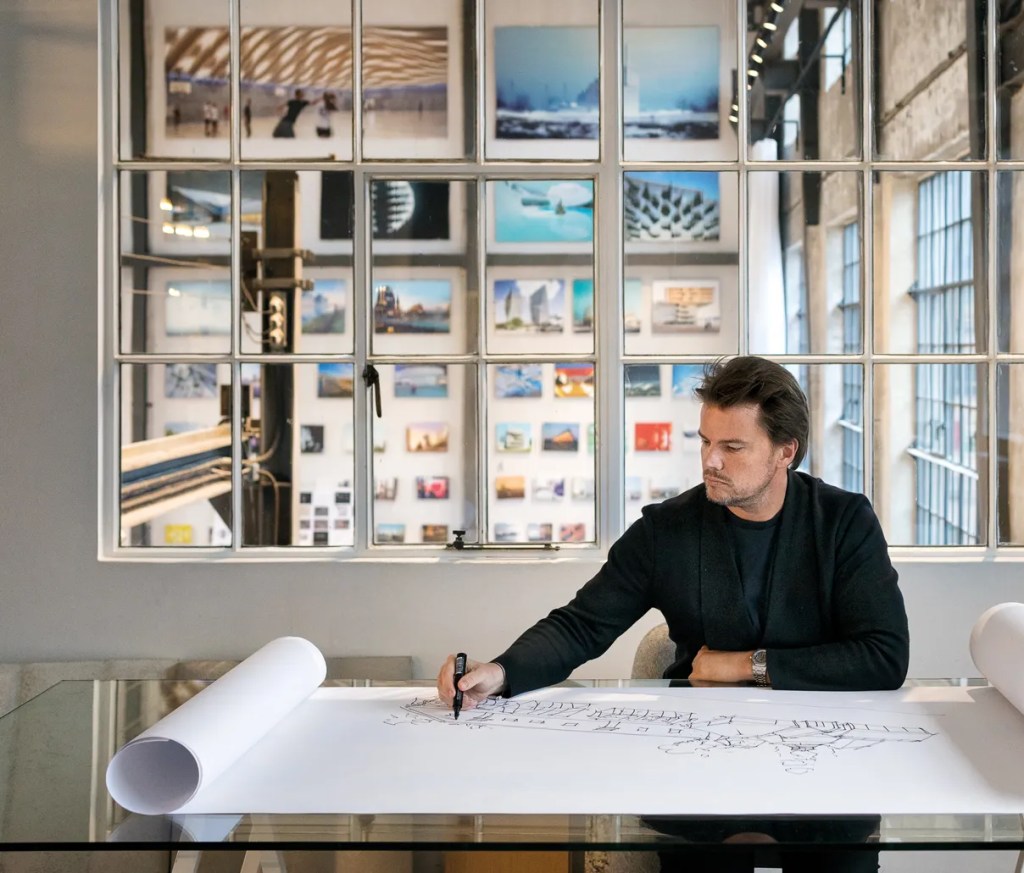
Bjarke Ingels is known as a second generation of global starchitects, bringing a bold yet approachable quality, full of humor, and exuding a gentle demeanor in his work.
Ingels was born in Copenhagen, 1974. At first, he wanted to be a comic artist. He chose to study architecture to improve his drawing skills, but this major leaded him into another way. After graduation, he used his knowledge in architecture combined with his graphic layout styles, he created his own style in work.
Ingels wrote ”seems entrenched between two equally infertile fronts: Either naively utopian or petrifyingly pragmatic. Rather than choosing one over the other, BIG operates in the fertile overlap between the opposites. A pragmatic utopian architecture that takes on the creation of socially, economically and environmentally perfect places as a practical objective.”. This also included in the overall style of his architecture firm BIG landscape.
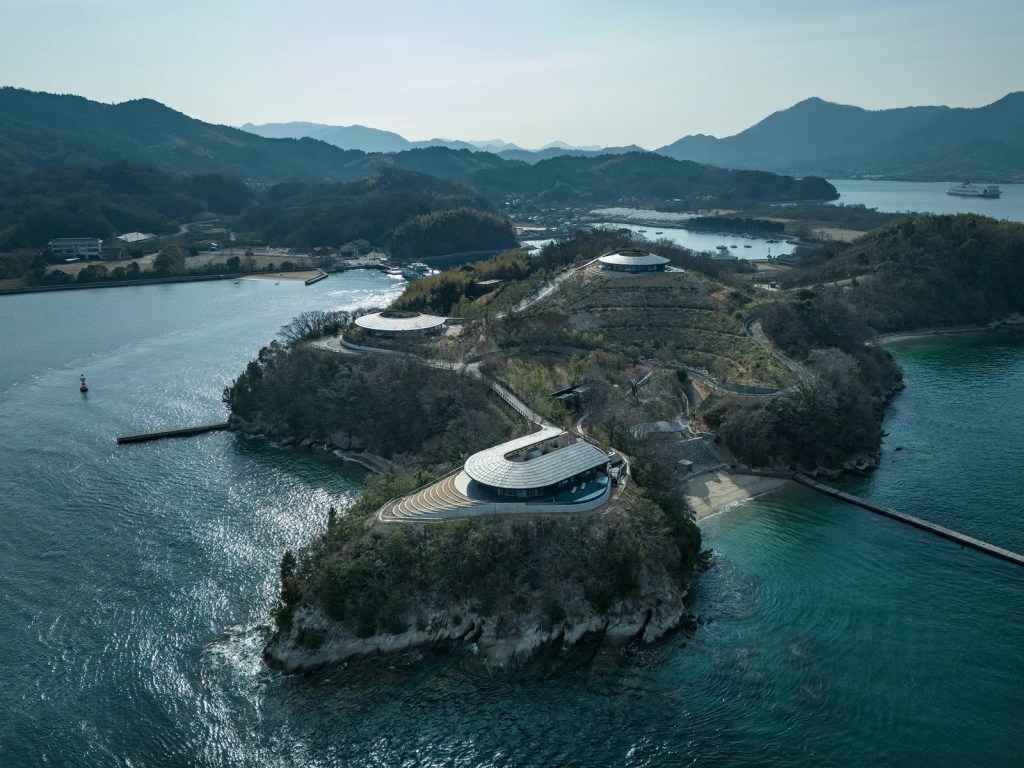
BIG’s master plan pays the utmost respect to the island’s naturally undulating terrain. Rather than leveling the hills, the team harvests the existing grass prior to construction and plans to replant native vegetation to restore the ecosystem. The design represents a fusion of Scandinavian and Japanese design philosophies which is a historical connection dating back to the 19th century, when Nordic designers were drawn to Japanese minimalism, the use of natural materials, and the culture’s deep bond with nature. From a distance, the project resembles ribbons of silk winding along the contours of the island’s varying elevations. Moreover, the roof not only generates electricity but also collects rainwater for reuse in the landscape irrigation system. A wide overhanging porch, combined with an operable glass façade, facilitates effective natural ventilation and passive cooling during spring and summer.
reference:
BIG (2024). NOT A HOTEL Setouchi | BIG | Bjarke Ingels Group. [online] BIG | Bjarke Ingels Group. Available at: https://big.dk/projects/not-a-hotel-setouchi-18610 [Accessed 14 July 2026].
Heathcote, E. (2025). Discover Bjarke Ingels, a modern starchitect of “pragmatic utopian architecture.” [online] Wallpaper*. Available at: https://www.wallpaper.com/architecture/bjarke-ingels-architecture-guide [Accessed 14 July 2026].
Ingels, B. (n.d.). BIG | Bjarke Ingels Group. [online] BIG | Bjarke Ingels Group. Available at: https://big.dk/about [Accessed 15 July 2026].

