
Week 3: Artist research
Victor Tardieu (1870-1937)
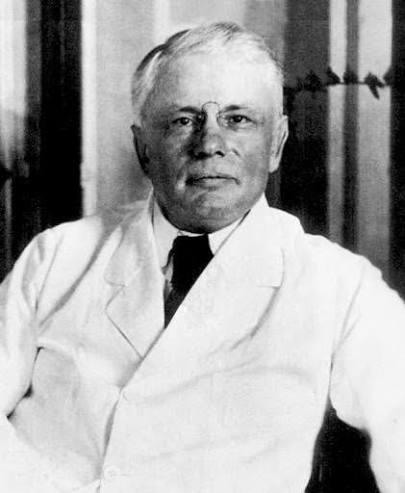
- Background & context
Victor Tardieu was a French artist. He joined the army and fought in northern France during World War I. At the age of 32, he had revealed outstanding talent when he won the national award with “Travail” which demonstrated workers on the construction site(Stephen, 2016). In 1920, he won the Prix de l’Indochine award. In January of 1921, he came to Indochina, starting from Saigon to Hanoi. This kept him there until his death, making him a part of Vietnamese art history (Stephen, 2016).
Amidst the explosion of avant-garde movements like Cubism and Surrealism in Europe, Tardieu completely rejected them. He brought this conservatism to Indochina, considering the creation of a traditional art form, inspired by nature, as a “remedy” against the decadence of Western modern art. Tardieu viewed culture and art as inherently linked to race and geographical origin. Therefore, he believed that Indochinese people should have an art form that truly reflected their Asian “soul,” free from foreign influences.
According to Simonetti (2016), the context was that France had just emerged from World War I with severe psychological and material trauma. This disorientation led to a nostalgic movement in France, known as “rappel à l’ordre,” gravitating towards peaceful rural landscapes. Therefore, Tardieu’s works, directed in Indochina, were a response to this psychological need of the mother country. Tardieu founded École des Beaux-Arts de l’Indochine against the backdrop of French colonial policy at the time. France wanted to demonstrate its ruling power not through violence but through altruism, acting as a mentor in preserving and developing the culture of the indigenous people.
2. Artwork
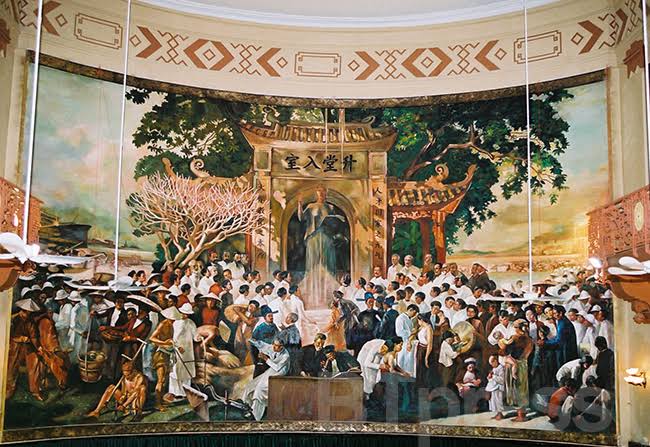
La France Apportant à sa Colonie les Bienfaits de la Civilisation The enormous mural covered the main lecture hall, the front lobby, and the dome of the University of Indochina, with a total area of up to 270m². This artwork’s subject is about the landscape of Hanoi in the early 20th century, a multi-class portrait of contemporary society, from French governors-general and politicians to ordinary citizens and indigenous women (Stephen, 2016) .
The artwork in the main lecture hall (77m²), 200 people gathered. In the center is an image of a traditional three-door gate of a Vietnamese village lying in the shade of an old tree, with four Chinese characters “升堂入室”(it means “Welcome you” as a friendly reception) engraved on the gate. In the middle of the gate is the image of the allegory of Progress (Allegorie du Progres) holding a book. Surrounding it is a vibrant panoramic painting of contemporary women and the four Governors-General of Indochina (Paul Doumer, Jean Baptiste Paul Beau, Albert Sarraut, Maurice Long), professors, and even his son – Jean Tardieu (Stephen, 2016) .
The book on the hand of Allegorie du Progres is the symbol of intellect. Tardieu wanted to convey a message about bringing the western intellect to merge with the friendliness and traditional culture of east asia. Placing the native people with high-ranking politicians demonstrates Tardieu’s humanist perspective and desire to connect different social strata (Stephen, 2016).
In this artwork, Tardieu used the extremely precise knowledge of geometry and perspective required to arrange 200 characters within a semi-domed space, maintaining the illusional depth of the pictorial space suited with the actual architecture of the building.
The painting depicts a blend of characters and settings that are distinctly East Asian, yet the background and certain details evoke a sense of European mythology. As a representative work from the French colonial era, it effectively conveys the message that France brought the benefits of civilization to its colonies. This reflects the mindset of the time regarding cultural exchange and imposition within a colonial context. Much like the architectural works of Ernest Hébrard, this piece embodies an aesthetic synthesis, utilizing imagery to reinforce a hybrid style.
My analysis:
I like each detail which represent for their specific meaning. This made the viewer deeply understand the historical context of artwork. Beside, I like the diversity of colour especially the lemon white of the gate in the back grounf. The overall vibe of the colour is bringing a classic feel yet incorporates many Vietnamese elements, drawing inspiration from the imagery of the Vietnamese social classes during the French colonial era.
Reference:
Stephen (2016). Victor Tardieu Life & Career. [online] Hanoi Art Tours. Available at: https://www.hanoiarttours.com/victor-tardieu-life-career/ (Accessed 10 Jun. 2026).
Simonetti, M.-A. (2016) The Ecole des Beaux-Arts de l’Indochine: Victor Tardieu and French Art Between the Wars. Master’s Thesis. University of Illinois at Chicago.
Annotations from site analysis research and artist research
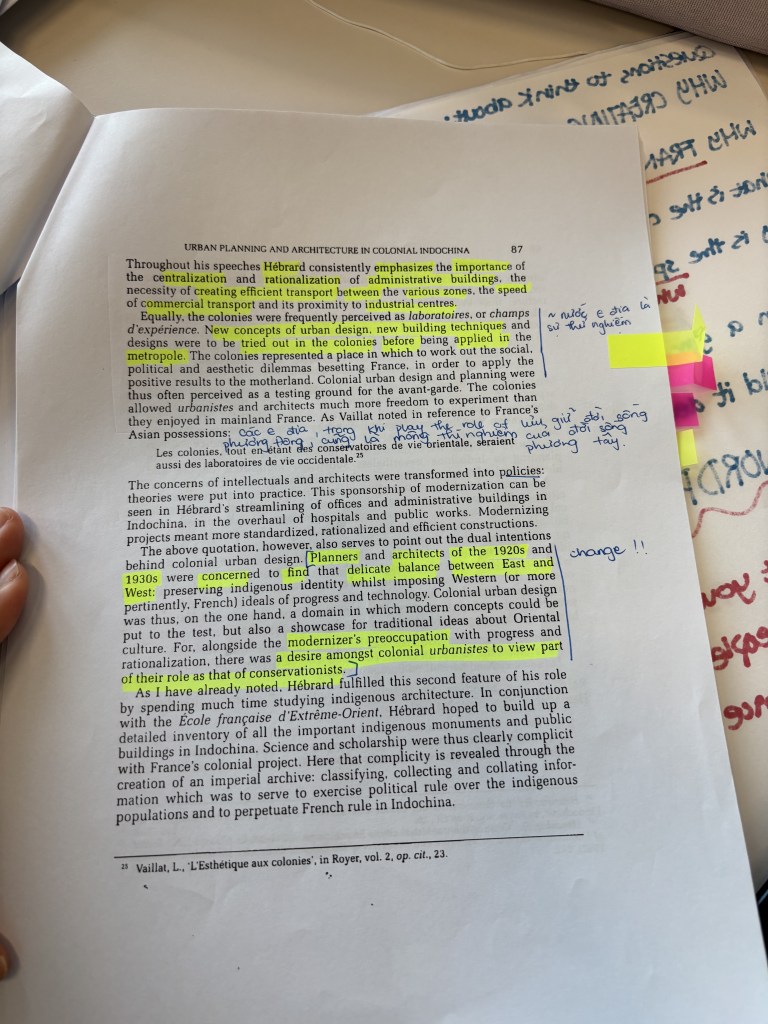
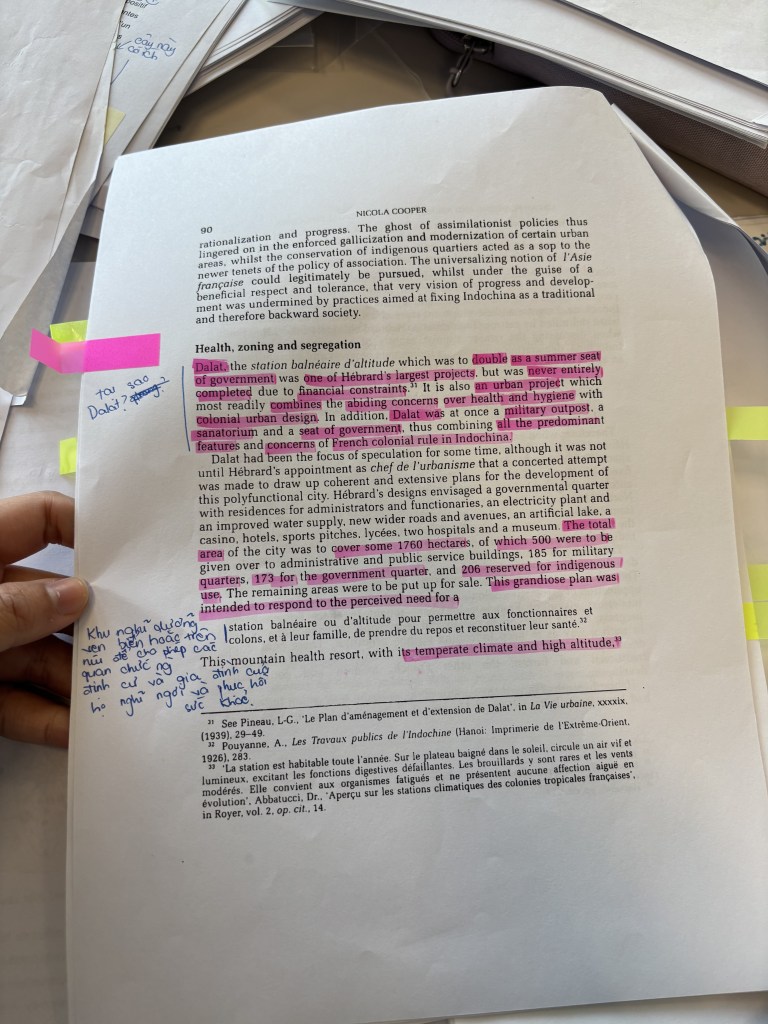
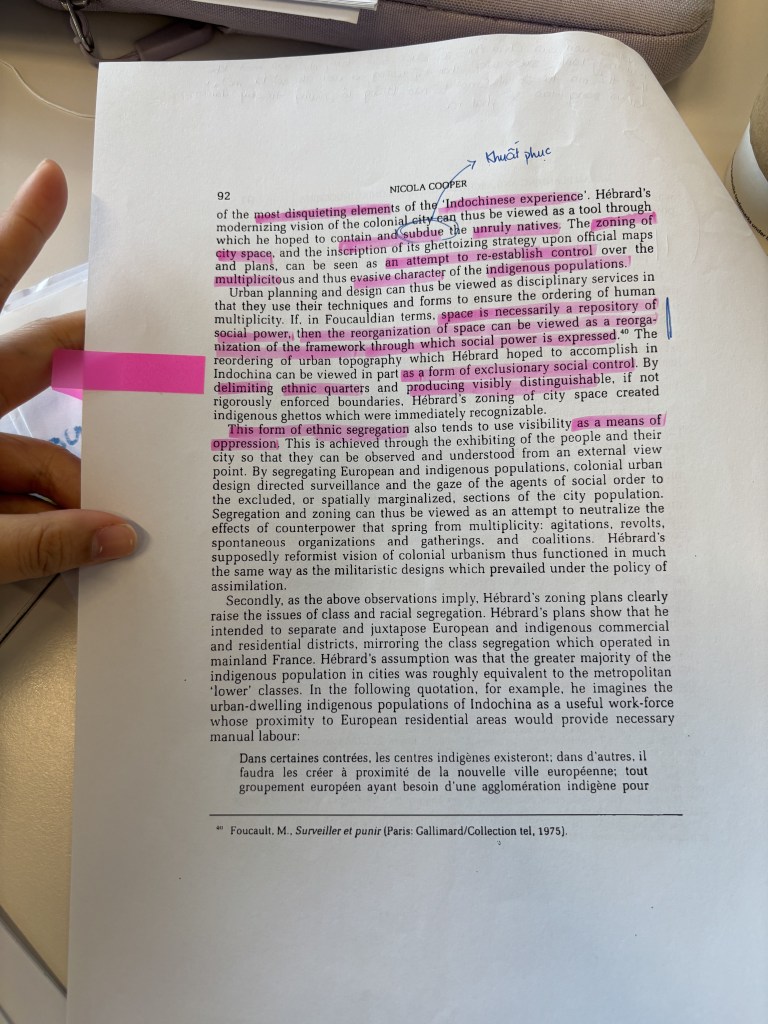
1-It analyzes how Hébrard and urban planners viewed urban space as a means of establishing power. The zoning strategy aimed to segregate population groups(Europeans and the indigenous population)thereby facilitating surveillance and the maintenance of social order.
2-Da Lat was planned around three core functions: a military outpost, a sanatorium, and an administrative center. The temperate climate, alongside hygiene and health standards, served as the primary drivers behind the city’s design and zoning decisions.
3-The opening section emphasizes the importance of establishing centralized administrative facilities and an optimized transportation network. Notably, the highlighted text underscores the core philosophy held by architects during the 1920s and 1930s: an effort to blend Western techniques and standards with the preservation of indigenous identity and aesthetics, a harmonious fusion of East and West.
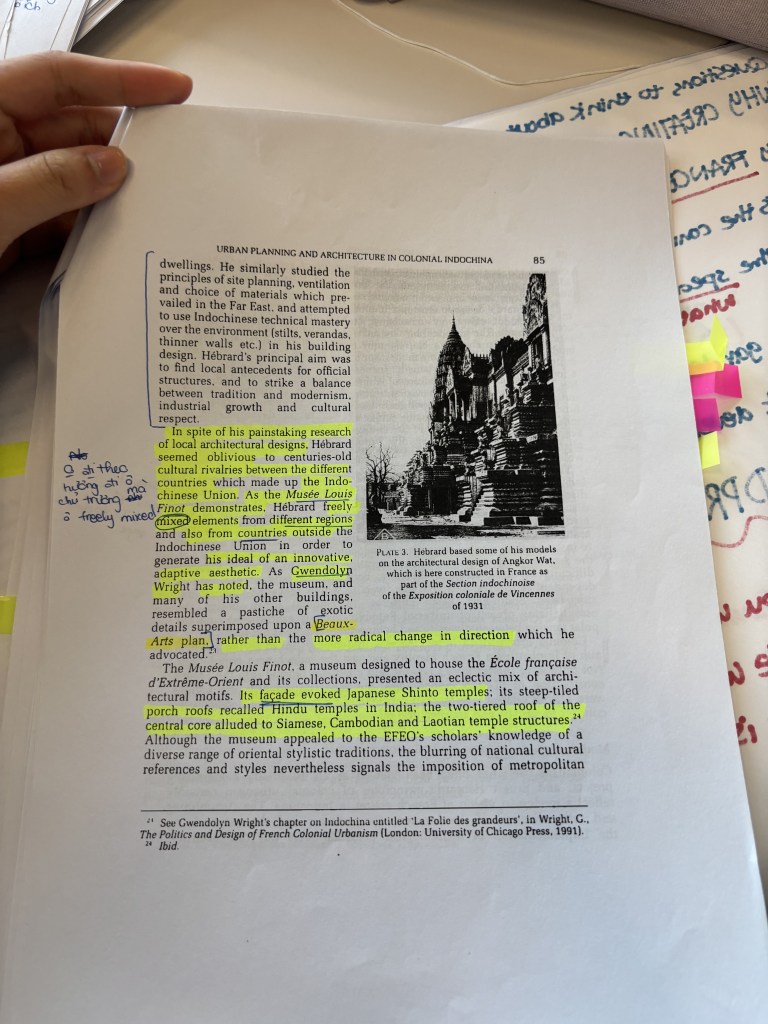
4-It points out that Hébrard’s Indochine style was essentially eclectic. He borrowed roof and tower details from various cultures such as Hindu, Siamese, Cambodian, and Lao traditions and superimposed them onto a spatial layout that was entirely French (Beaux-Arts) in nature. Your marginal notes appear to further analyze the freedom with which these elements were assembled.
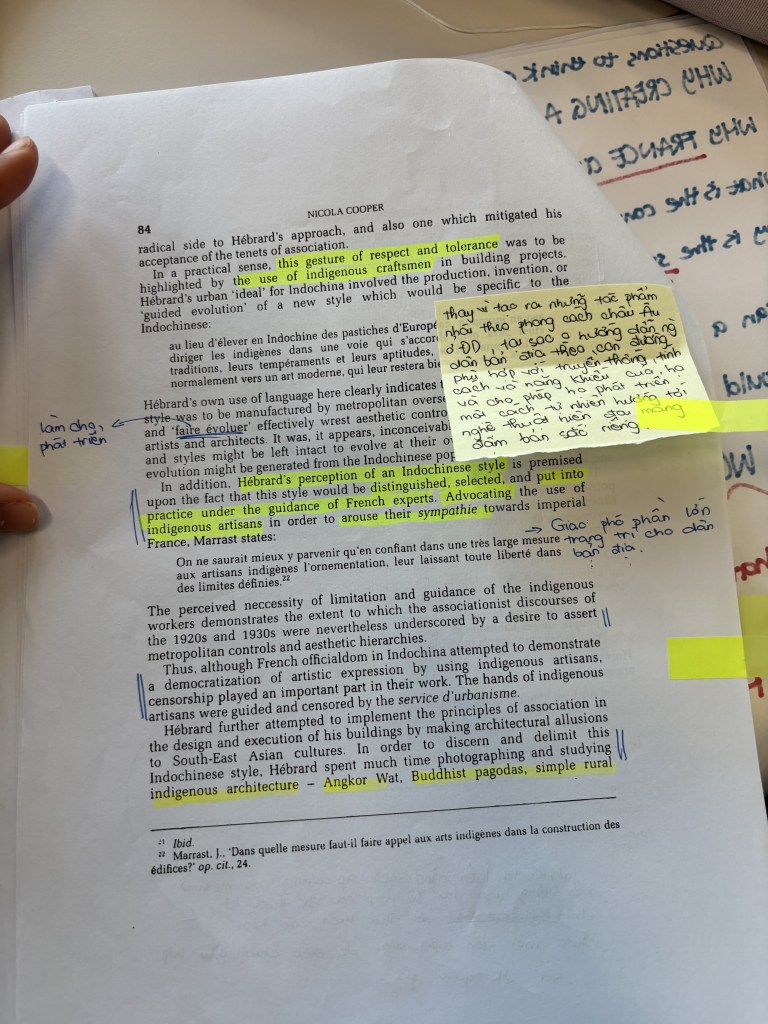
5-Hébrard did not simply impose European architecture upon Indochina; instead, he took the time to study indigenous architecture such as Angkor Wat and Buddhist temples, and employed local artisans for construction. The author argues that this was a strategy to “win hearts and minds,” using art to soothe tensions and foster goodwill toward the colonial administration.
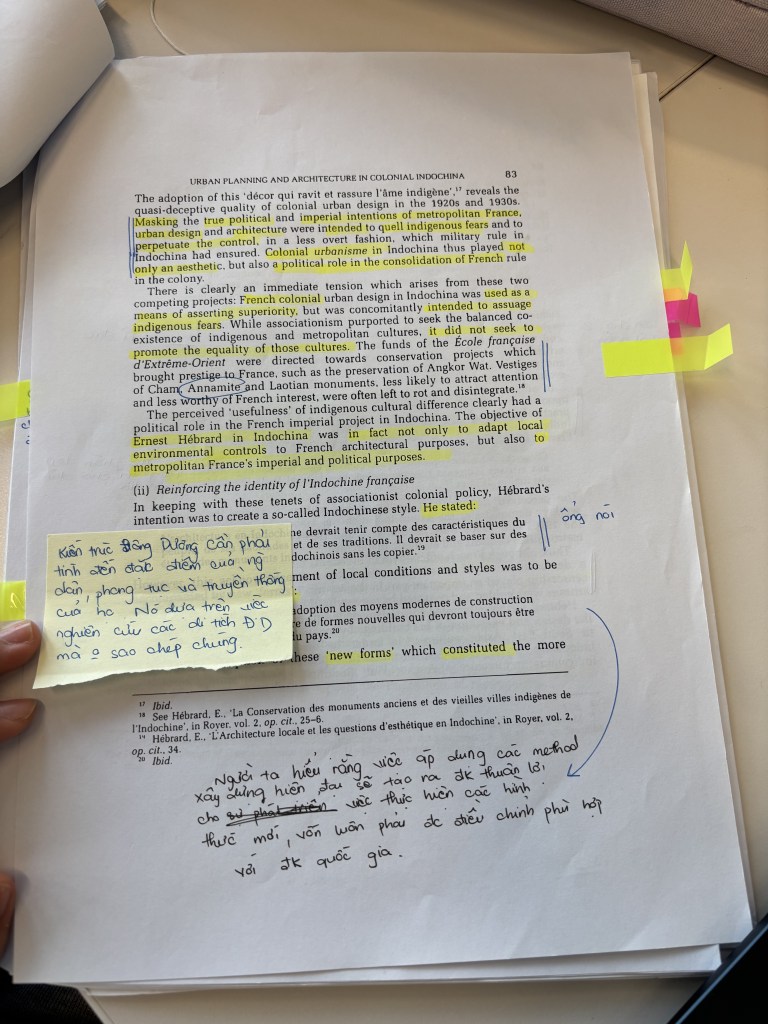
6-The Indochine architectural style was not merely a solution to climatic or aesthetic challenges; its ultimate purpose was to serve imperial ambitions. the sticky note raises questions regarding the “copying” of traditional characteristics. The handwritten note at the bottom is particularly insightful: it highlights the tension between adopting Western “modern construction methods” and the need to “blend and adapt” to local conditions.
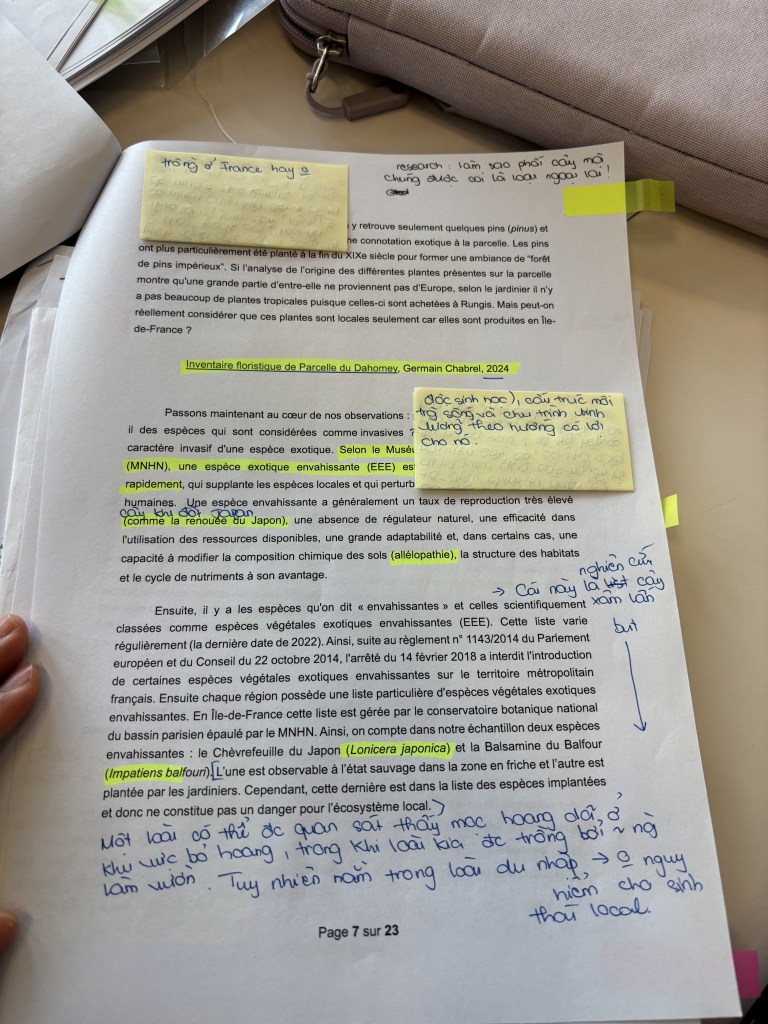
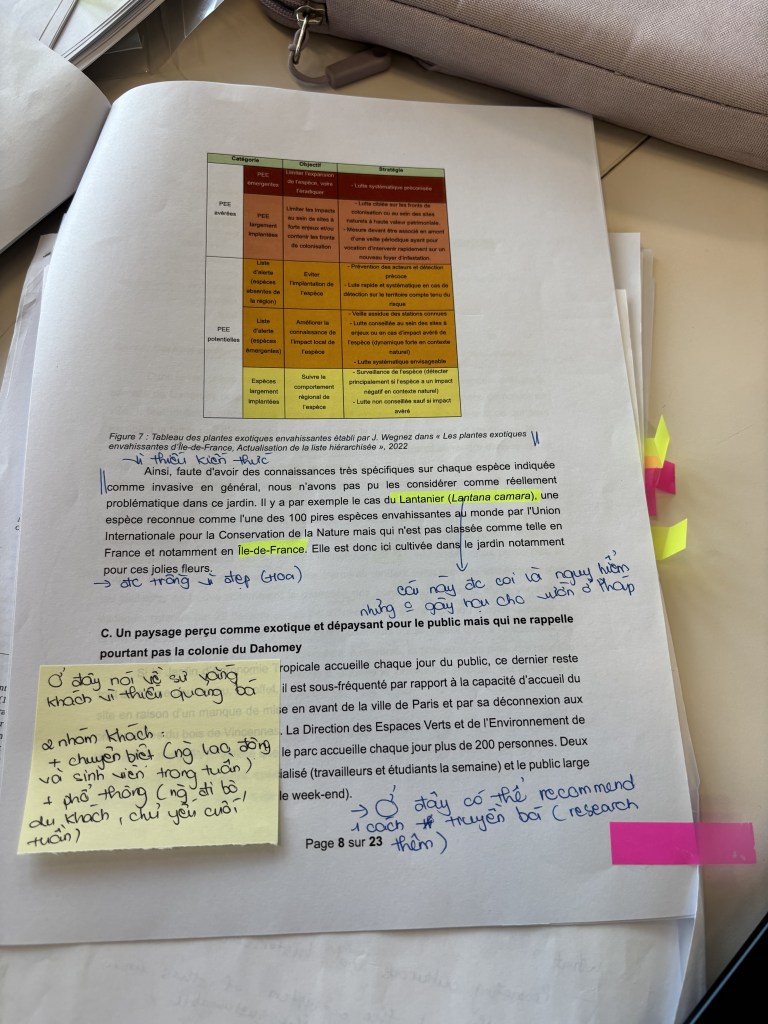
A major paradox exists in landscape design when aesthetic considerations take precedence over ecological knowledge. A prime example is the planting of exotic species with attractive flowers such as Lantana camara (Lantana) or Impatiens balfouri in French-style gardens, despite their inclusion on lists of the most dangerous invasive species. These exotics not only reproduce rapidly and lack natural predators but also employ survival mechanisms that suppress other species (allelopathy, where chemicals are released to alter soil composition). Whether they grow wild (like Lonicera japonica or Japanese honeysuckle) or are intentionally planted for ornamental purposes, they directly threaten the integrity of the local ecosystem.
Assessing the success of a landscape space also depends on its users. Categorizing user groups such as those who frequent the site on weekdays versus the general public or tourists who visit on weekends. This helps identify reasons for low visitor numbers (such as a lack of promotion). This insight, in turn, guides the development of communication strategies and more inclusive design solutions.

