
Week 9: Presentation and Feedback
This week, we did the art movement presentation that we prepare last week.
Feedback:
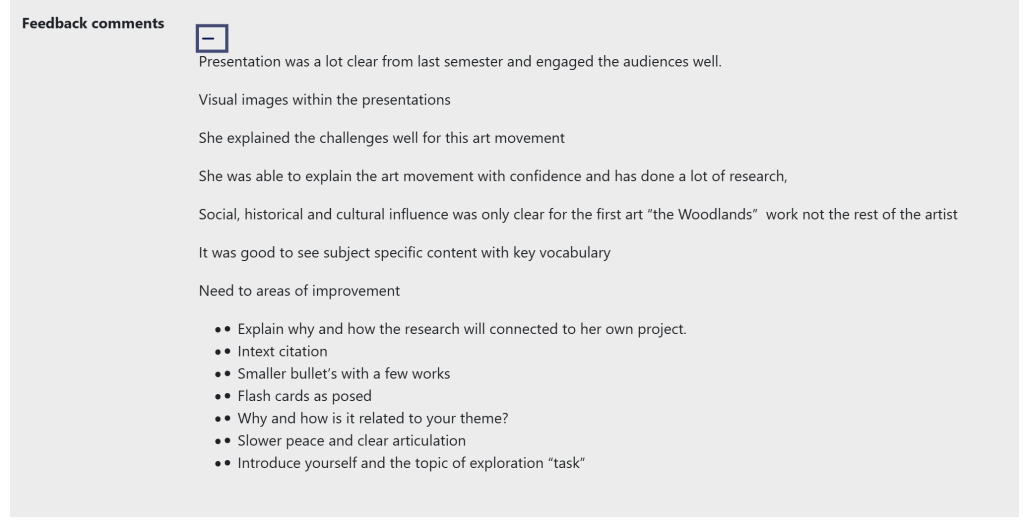
After gaining feedback from my audience, I understand my shortcoming and will improve it.
Pavilion research (Addition)
There is no specific inventors for pavilion.
A pavilion is a temporary or semi-permanent structure, often featuring ample natural light, used in gardens and recreational areas. While there are many variations, the basic type is a spacious, bright, and airy garden room with a high, pointed roof resembling a canopy. Originally, it was much like modern marquees, for special occasions such as festivals, garden parties, and balls, these structures later became more permanent; by the late 17th century, the term was applied to any garden structure designed for special events.
Although many decorative garden pavilions survive in historic gardens, including those across East Asia, modern usage of the term, particularly in the West, is often limited to structures at sports grounds (housing changing rooms and equipment storage) or temporary buildings erected for world’s fairs. The term “pavilion” can also refer to tents, summerhouses, ballrooms, performance stages, and annexes or structures connected to a larger building. Additionally, it may describe a projecting section of a massive architectural complex, notably the central or end sections of a Classical-style façade.
reference:
Britannica (n.d.). Pavilion | architecture. [online] Encyclopedia Britannica. Available at: https://www.britannica.com/art/pavilion-architecture [Accessed 5 Aug. 2026].
- Western Pavilion: Pritzker Pavilion
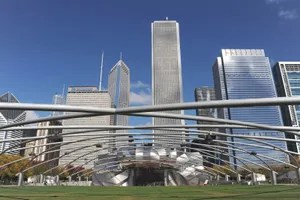
Completed in 2004 as part of Millennium Park, the Pritzker Pavilion features a striking centerpiece: a soaring stainless-steel bandshell that curves and undulates like a wave. The magnificent structure, which extends over a vast lawn, offers both unique architectural beauty and effective acoustic functionality. The pavilion embodies a modern aesthetic through its use of materials such as stainless steel, while its substantial scale is designed to accommodate festivals and performances. I really like the pavilion’s massive scale and its open steel-frame structure, which creates an airy atmosphere even when crowded.
- Eastern Pavilion: Canglang Pavilion
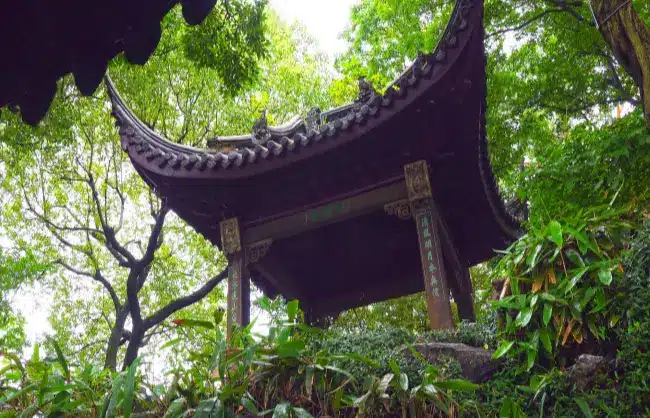
The pavilions and similar structures are more intricately crafted, often featuring roofs with eaves that curve gently upward at the corners. Furthermore, these structures frequently incorporate decorative elements: some may feature statues of mythical creatures on the roof, others display painted or carved motifs such as landscapes, trees, or historical figures on the beams, while some may exhibit calligraphy or relief carvings on the pillars. Tiled roofs are quite common.
Reference:
Chicago Architecture Center (2024). Chicago architecture center. [online] Chicago Architecture Center. Available at: https://www.architecture.org/online-resources/buildings-of-chicago/pritzker-pavilion [Accessed 1 Aug. 2026].
Natalia (2025). Classic Chinese garden structures: Pavilions, terraces &more. [online] China Xian Tour: Private & Tailor-Made China Tours – China Xian Tour offers flexible private China tours with the lowest price & best service. Available at: https://www.chinaxiantour.com/travel-guide/chinese-pavilion [Accessed 30 July 2026].

